Dairy Safety: How to Handle Milk, Paneer, and Indian Dairy Products Safely
When you buy dairy safety, the practices that ensure milk and milk-based foods don’t cause illness. Also known as milk hygiene, it’s not just about refrigeration—it’s about how you handle every step from the cow to your kitchen. In India, where milk is part of breakfast, lunch, and dessert, getting dairy safety right means avoiding stomach issues, preserving flavor, and making sure your paneer doesn’t turn rubbery or your curd doesn’t go sour too fast.
milk safety, the process of keeping raw and pasteurized milk free from harmful bacteria starts before it even reaches your fridge. Boiling milk isn’t just tradition—it’s science. Many households skip this step, assuming store-bought milk is safe. But in places with inconsistent cold chains, even packaged milk can warm up and breed bacteria. The same goes for paneer safety, how you curdle, press, and store homemade cheese. Using lemon juice or vinegar? Good. But if your bowl isn’t clean, or you leave the paneer out for hours after making it, you’re inviting trouble. Paneer should be stored in cold water, changed daily, and used within 2–3 days. No exceptions.
Then there’s Indian dairy products, the wide range of milk-based foods like ghee, lassi, rabri, and khoa. Each has its own rules. Ghee lasts longer because it’s fat-only, but if you leave a spoon in it, moisture gets in—and mold follows. Lassi? Always made with fresh curd, never old. And khoa? If it’s too moist, it spoils fast. These aren’t opinions—they’re what your grandmother knew, and what modern food safety guidelines confirm.
You’ll find posts here that connect directly to these practices. Like how fermenting dosa batter relies on clean containers and the right temperature. Or why soaking dal matters—not just for texture, but to reduce bacteria that thrive in damp, warm conditions. You’ll see why street food safety in India isn’t about avoiding vendors, but knowing which ones keep their milk, yogurt, and paneer cold and fresh. And you’ll learn how much paneer you really get from a gallon of milk—not just for cost, but to know if you’re using enough dairy to begin with.
Dairy safety isn’t complicated. It’s about clean hands, clean tools, cold storage, and not rushing the process. Skip the shortcuts, and you won’t just avoid illness—you’ll taste the difference. Whether you’re making biryani with homemade raita, or sweets with fresh khoya, your food will be better. And safer. The posts below give you the exact steps, mistakes to avoid, and real-life fixes used in Indian kitchens every day.
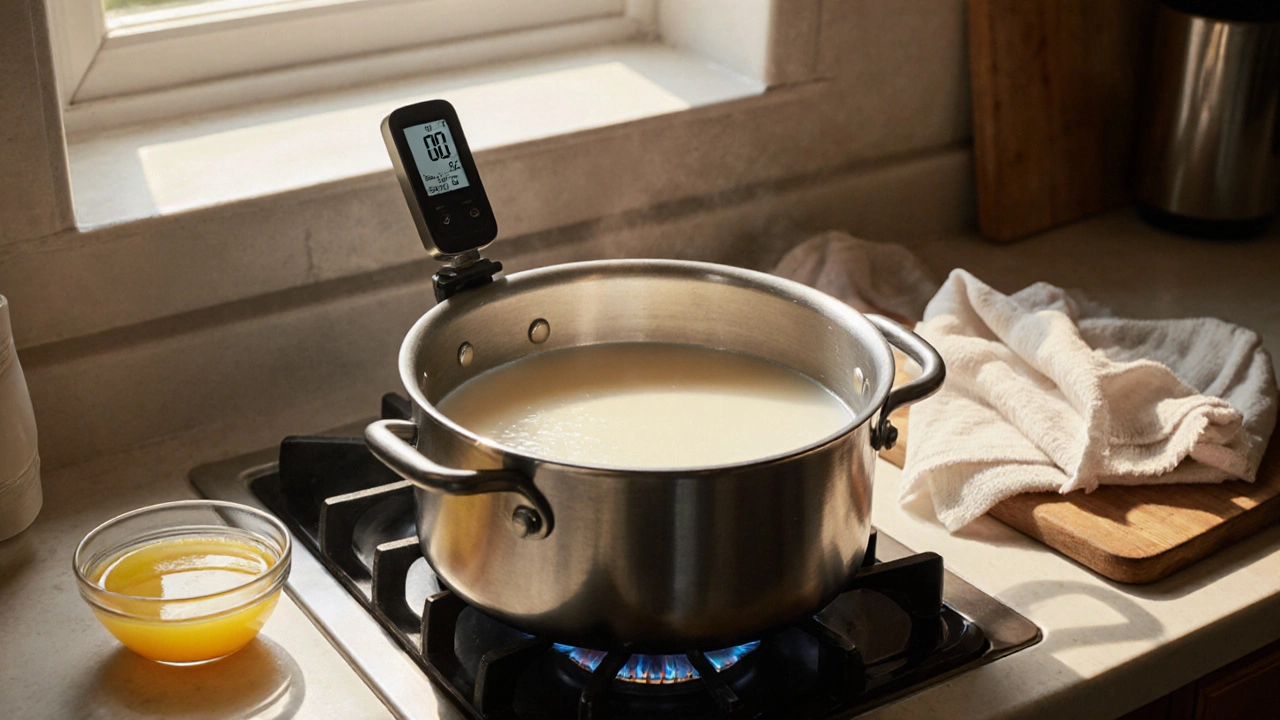
How to Make Paneer from Broken Milk - Safe DIY Guide
Learn how to safely turn mildly sour or "broken" milk into fresh paneer at home, with step‑by‑step instructions, safety tips, and storage advice.
Read More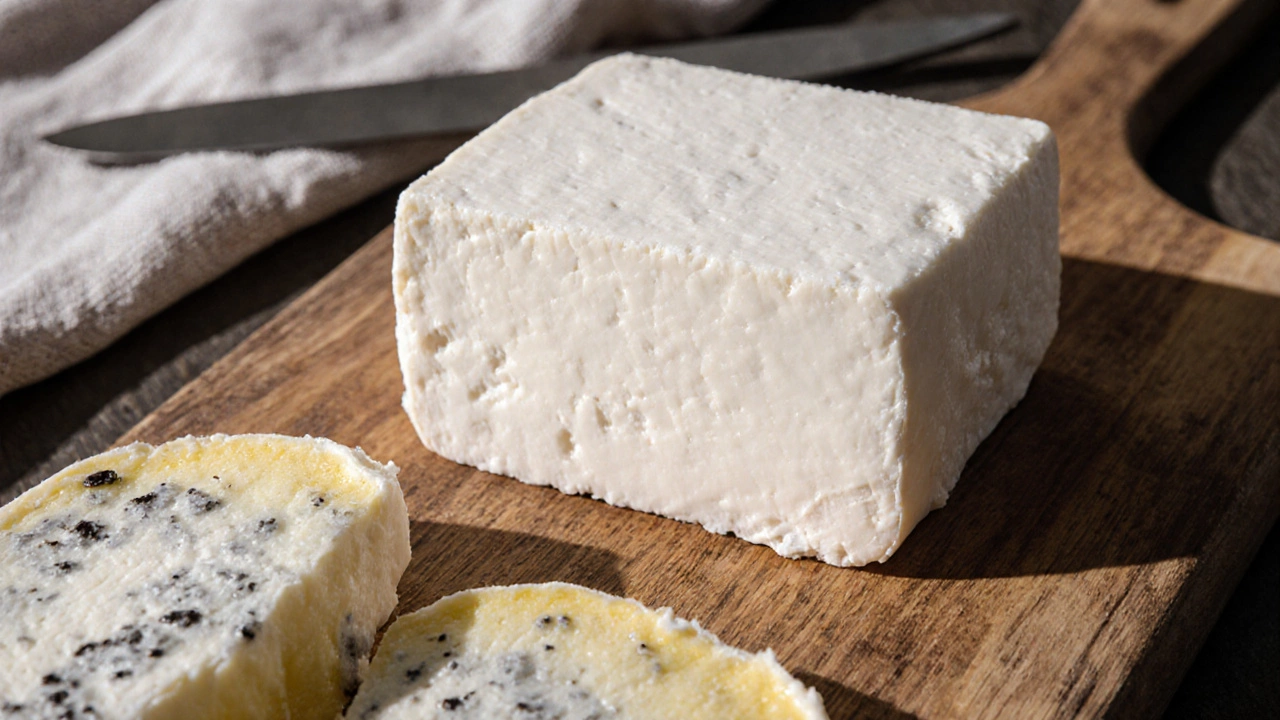
How to Tell If Paneer Is Spoiled - Simple Checks & Safety Tips
Learn to spot spoiled paneer with simple visual, smell and touch tests, plus storage tips to keep it fresh and safe.
Read More