British Condiments: What They Are, How They're Used, and Their Link to Indian Food
When you think of British condiments, common table sauces like ketchup, brown sauce, and mint sauce that have shaped British and Commonwealth eating habits. Also known as British sauces, they are more than just flavor boosters—they’re cultural artifacts born from colonial trade, industrial food production, and the need to preserve taste through long winters. These aren’t just random bottles on the shelf. They’re the result of centuries of food adaptation, especially where British tastes met Indian ingredients.
Take ketchup, a tomato-based sauce once made from fermented fish in Asia, later adapted by the British into the sweet, thick version we know today. It’s now a global staple, but its journey through India is less known. In Indian homes, ketchup often replaces traditional tamarind chutney in snacks like samosas or pakoras—not because it’s authentic, but because it’s convenient and familiar. Meanwhile, brown sauce, a tangy, molasses-heavy condiment popular with breakfasts and pies in the UK, shows up in Indian households too, especially in cities with colonial history like Mumbai or Kolkata. It’s used on eggs, grilled cheese, or even mixed into curry bases for depth.
The real connection? chutney, a broad category of Indian condiments made from fruits, herbs, or spices, often fermented or cooked down. British colonists didn’t just take chutney—they bottled it, renamed it, and sold it back to India as "Indian chutney." Today, you’ll find jars of "Mango Chutney" on British shelves that taste nothing like the fresh, spicy versions made in a Mumbai kitchen. But here’s the twist: modern Indian cooks now use British-style ketchup and brown sauce to create fusion dishes, like chicken tikka masala with a splash of HP sauce for extra richness. It’s not cultural theft—it’s adaptation.
You’ll find this blend of traditions in many of the posts below. From why chicken tikka masala became a global favorite (hint: it was invented in Britain) to how homemade paneer pairs with simple sauces, these recipes show how food doesn’t stay still. It moves. It changes. It crosses borders. Whether you’re curious about what gives British sauces their punch, how chutney differs from ketchup, or why Indian families keep brown sauce in the fridge next to mango pickle, the answers are here. No theory. No fluff. Just real food, real stories, and the quiet way cultures taste each other’s kitchens.
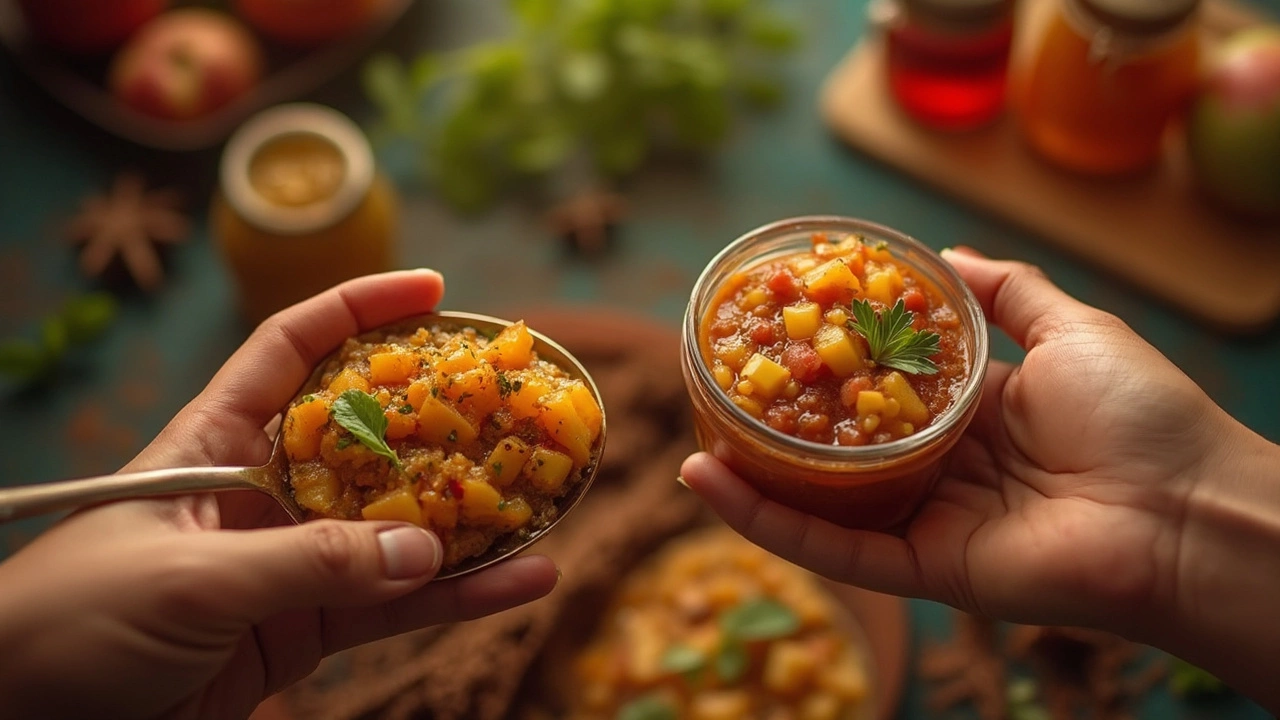
English Chutney: What Sets It Apart?
Ever wondered why English chutney tastes so different from Indian chutney? This article breaks down the story, the key ingredients, and how it became a British classic. If you're curious about how to make or use English chutney, here’s everything you need. Expect surprising facts, smart prep tips, and ideas for enjoying this tangy-sweet spread. Get ready to add some zing to your snack game.
Read More