Biryani Cooking Technique: Master the Art of Layering, Spicing, and Dum Cooking
When you think of biryani cooking technique, a layered rice dish from India that combines spiced meat, aromatic rice, and slow-steamed flavors. Also known as dum biryani, it’s not just a recipe—it’s a method built on timing, temperature, and trust in tradition. This isn’t about tossing ingredients into a pot and hoping for the best. Real biryani happens in layers, in silence, over low heat. The magic isn’t in the spices alone—it’s in how they’re applied, when they’re added, and how long the dish rests before it’s served.
The dum cooking, a slow-steaming method where the pot is sealed and cooked over low heat. Also known as slow baking, it’s the secret behind tender meat and fragrant rice that doesn’t turn mushy. Skip this step, and you’re just eating spiced rice with chicken. The biryani layering, the careful stacking of rice, meat, herbs, and saffron milk in alternating layers. Also known as parboiled layering, it ensures every bite has balance—not just heat, but aroma, texture, and depth. Too much oil? Too little saffron? Wrong rice? Each mistake breaks the chain. Basmati rice must be parboiled just right—al dente, not soft. The meat needs to be marinated long enough to absorb flavor but not so long that it turns rubbery. And the spices? They’re not mixed into the rice. They’re sprinkled, layered, and kissed by steam.
People think biryani is hard because they’ve seen complicated videos with ten pots and fancy tools. But it’s not about equipment. It’s about patience. You don’t need a pressure cooker or a tandoor. You need a heavy-bottomed pot, a tight lid, and the will to wait. The rice for biryani, long-grain basmati, aged and rinsed until the water runs clear. Also known as aromatic rice, it’s the foundation—without it, the whole dish collapses. The white liquid you see beside it? That’s raita. Not just a side. A reset button for your tongue. And the mistakes? Overcooking the rice, skipping the marination, using cheap oil, or rushing the steam—those are the real killers.
What you’ll find below aren’t just recipes. They’re fixes. Real talk from people who’ve burned biryani, ruined rice, and learned the hard way. You’ll see why dum cooking isn’t optional, how layering turns good biryani into unforgettable biryani, and what rice actually works in Indian kitchens. No fluff. No tricks. Just what happens when you do it right—and what goes wrong when you don’t.
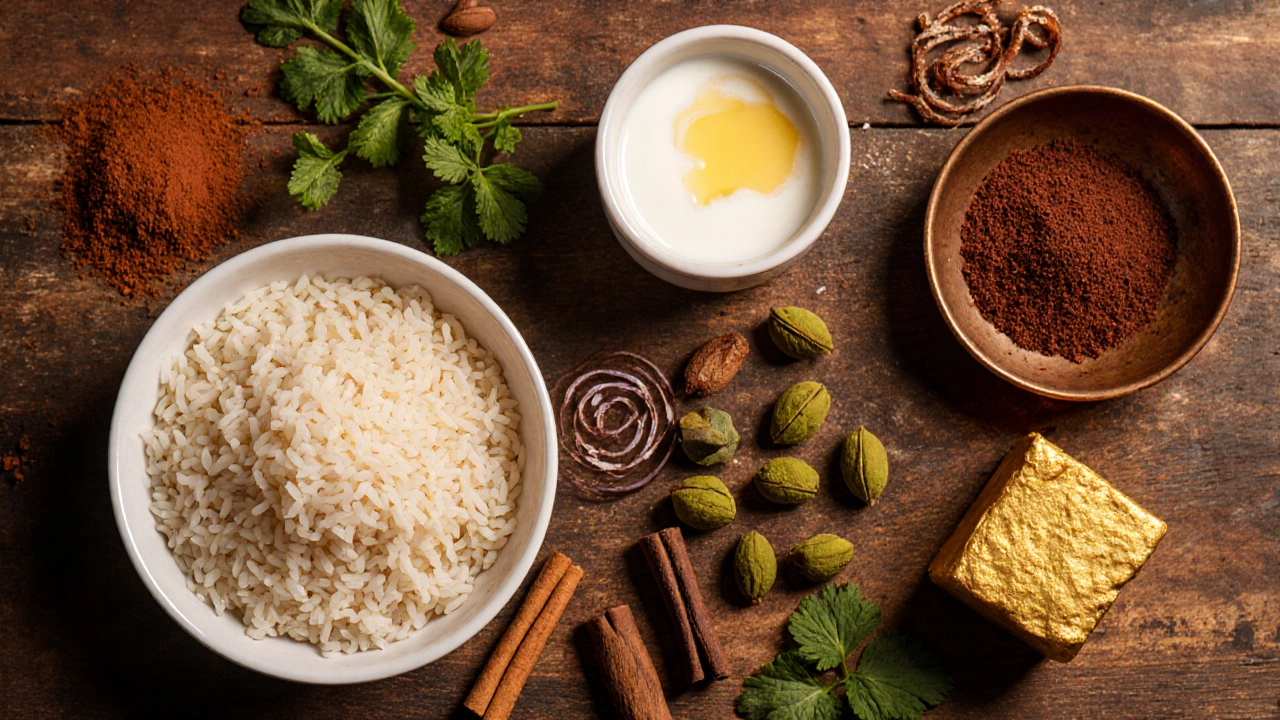
What Gives Biryani Its Signature Taste?
Discover the key ingredients and cooking tricks that give biryani its unforgettable flavor, from aromatic spices to the dum technique.
Read More