Best Onion for Curry: Types, Uses, and Why It Matters
When you're making curry, the onion, a foundational ingredient in Indian cooking that builds depth, sweetness, and body. Also known as the base of masala, it's not just a flavor booster—it's the backbone of most curries, from butter chicken to chana masala. But not all onions work the same. Use the wrong one, and your curry tastes flat, bitter, or watery. Get it right, and it melts into a rich, caramelized foundation that makes every other ingredient shine.
The red onion, a slightly sweet, mildly pungent variety often used raw or lightly cooked is great for garnishes or raitas, but it doesn’t break down well in long-cooked curries. The white onion, a sharper, more intense type common in North Indian kitchens holds up better under heat and caramelizes into a deep, earthy base—perfect for biryanis and gravies. But the real secret? The yellow onion, the most versatile, with a balance of sweetness and bite that turns golden and buttery when slow-cooked. It’s what most professional Indian cooks use because it dissolves into the oil, carries spices, and adds body without overpowering.
Why does this matter? Because curry isn’t just about spices—it’s about layers. The onion is the canvas. If it’s undercooked, your curry tastes raw and harsh. If it’s burned, it turns bitter. If it’s too watery, your sauce won’t thicken. The best onion for curry isn’t about size or price—it’s about how it behaves when it hits hot oil. Slow fry it with a pinch of salt, and it turns translucent, then golden, then almost sweet. That’s when you add your ginger-garlic paste. That’s when the magic starts.
Regional differences matter too. In South India, you’ll often find small, sweet onions called "shallots" used in sambar and rasam. In Punjab, large, sturdy white onions are chopped fine and fried until they disappear into the gravy. In Bengal, a touch of red onion adds color to fish curries. But across the country, the golden-yellow onion remains the silent hero.
You don’t need fancy tools. Just good onions, low heat, and patience. Skip the microwave shortcuts. Don’t rush the fry. Let the onion soften slowly, letting its natural sugars bloom. That’s the difference between a good curry and one that makes you close your eyes and take another bite.
Below, you’ll find real stories from home cooks and chefs who’ve cracked the code on onion use—from fixing soggy curries to making restaurant-style gravies at home. No fluff. Just what works.
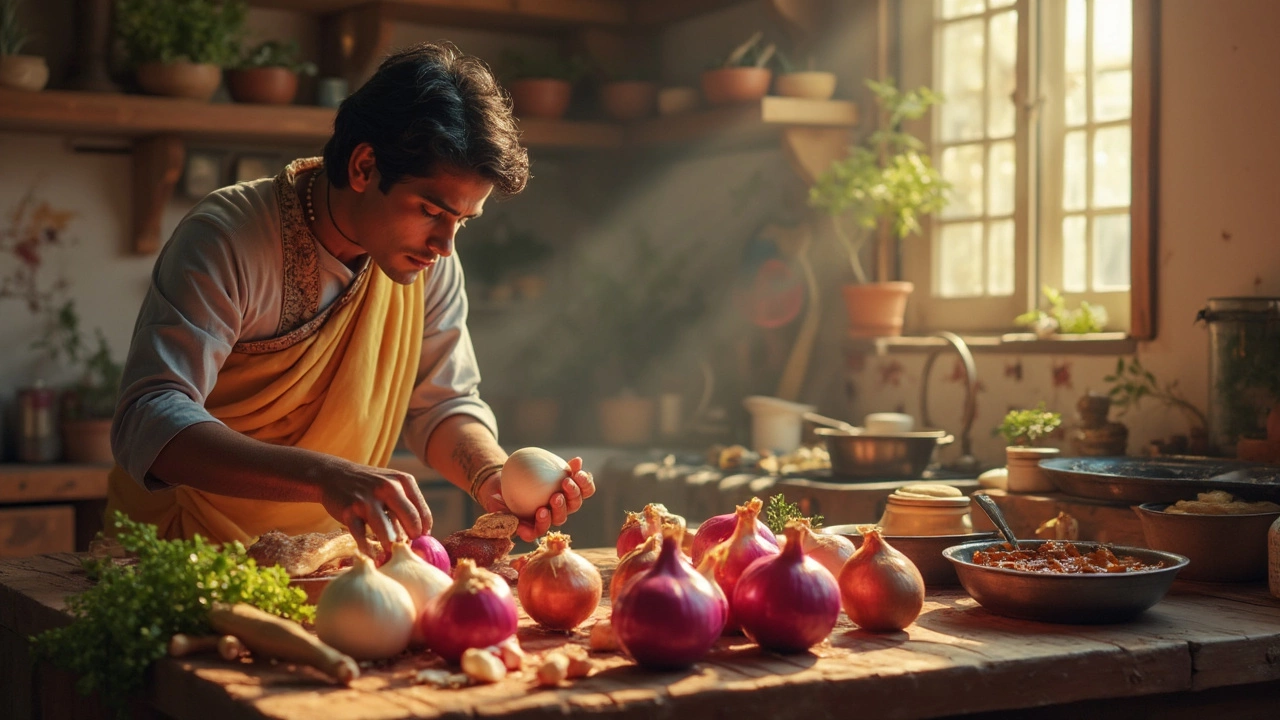
Red or White Onions: Which Is Best for Chicken Curry?
Not sure whether to grab red or white onions for your chicken curry? This article breaks down how each kind affects the taste, color, and texture of your curry. Get tips on how Indian cooks actually use onions in their home kitchens, and learn small tricks that could make your next curry even better. Find out when it’s worth swapping one type for another and which mistakes to avoid if you want the real deal. If you've been curious about the science behind those golden-brown onions, you’re in the right place.
Read More