30/30/30 Rule: What It Is and How It Applies to Indian Cooking
When people talk about the 30/30/30 rule, a simple timing guideline used in cooking to balance preparation, fermentation, and cooking phases. It’s not just a fitness hack—it’s a quiet kitchen law that makes paneer firm, dosa crispy, and biryani fragrant. In Indian cooking, timing isn’t optional. It’s the difference between a soggy dosa and one that cracks just right. It’s why your paneer turns out rubbery or smooth. And it’s why some people make perfect raita every time while others struggle.
The first 30? That’s usually soaking time, the period dal or rice sits in water before grinding or cooking. For example, soaking urad dal for 30 minutes gives you the right texture for dosa batter. Too short? The batter won’t ferment well. Too long? It turns slimy. The second 30? That’s fermentation time, the window when natural bacteria turn batter sour and airy. Most traditional recipes need 8–12 hours, but the 30/30/30 rule reminds you that the first 30 minutes after mixing matter most—temperature and cover make or break it. The third 30? That’s cooking time, the critical minutes when heat sets texture and flavor. A dosa needs 30 seconds on a hot griddle, not a minute. Paneer curdles in 30 seconds after adding lemon juice. Overcook it, and you lose the softness.
This rule shows up everywhere in Indian kitchens. It’s why you don’t rush biryani’s dum cooking—it needs time to steam, not burn. It’s why you let idli batter rest overnight, not just 30 minutes. And it’s why your milk-to-paneer yield drops if you boil too fast. The 30/30/30 rule isn’t magic. It’s patience made measurable. You don’t need fancy tools. You just need to watch the clock and trust the process.
Below, you’ll find real kitchen stories from people who fixed their dosa, cracked the paneer code, and finally made biryani that didn’t fall apart. No theory. No fluff. Just what worked—when, how, and why.
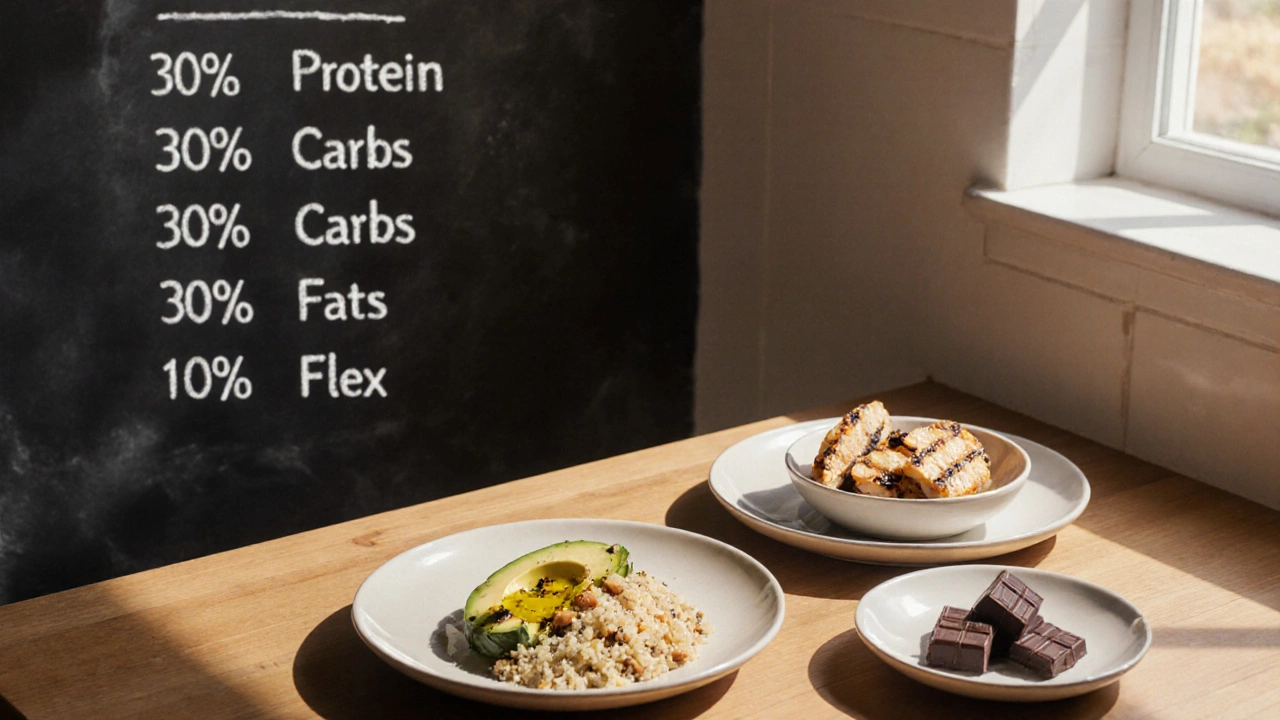
30/30/30 Rule for Weight Loss: How It Works and Indian Snack Ideas
Learn the 30/30/30 weight loss rule, calculate your macro goals, and enjoy Indian snack ideas that fit the plan for sustainable results.
Read More