Dosa Baking Soda Advisor
Dosa Baking Soda Advisor
Answer a few questions to see if you need baking soda for perfect dosa crispiness.
Ever made dosa batter that didn’t crisp up, no matter how hot the pan? Or wondered why some recipes call for a pinch of baking soda when the batter already ferments overnight? It’s not a shortcut. It’s science.
What fermentation does to dosa batter
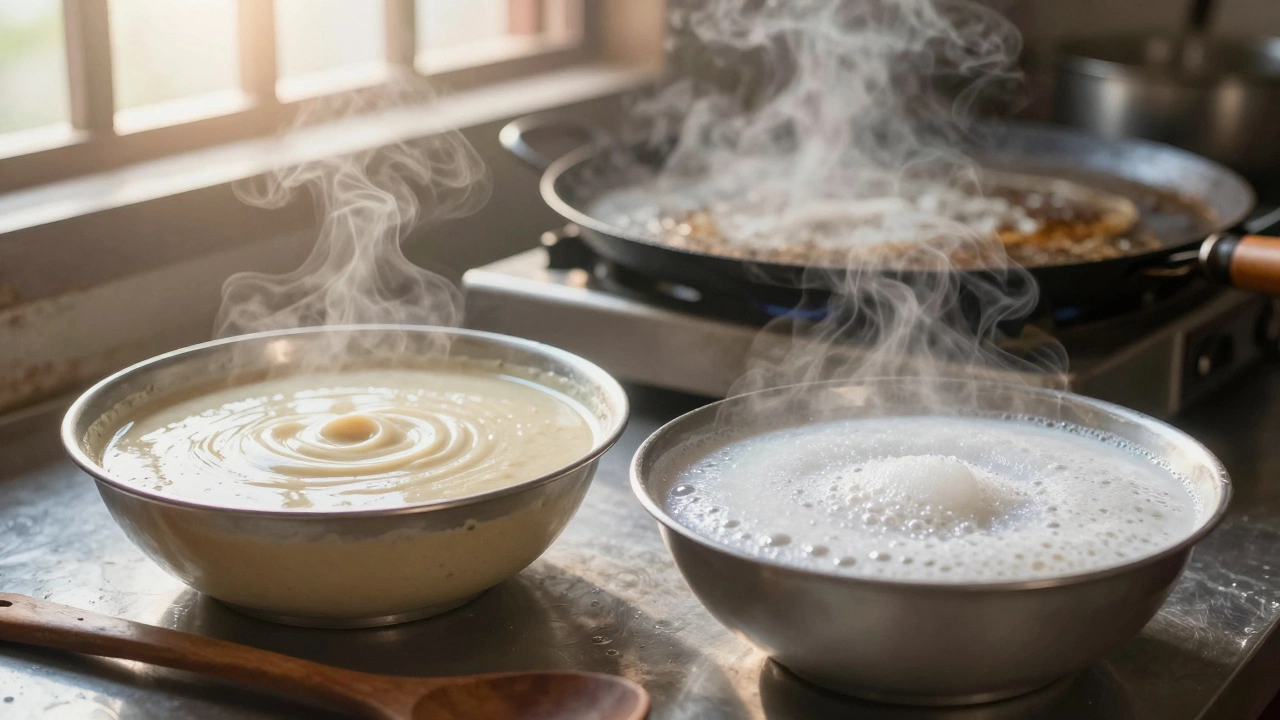
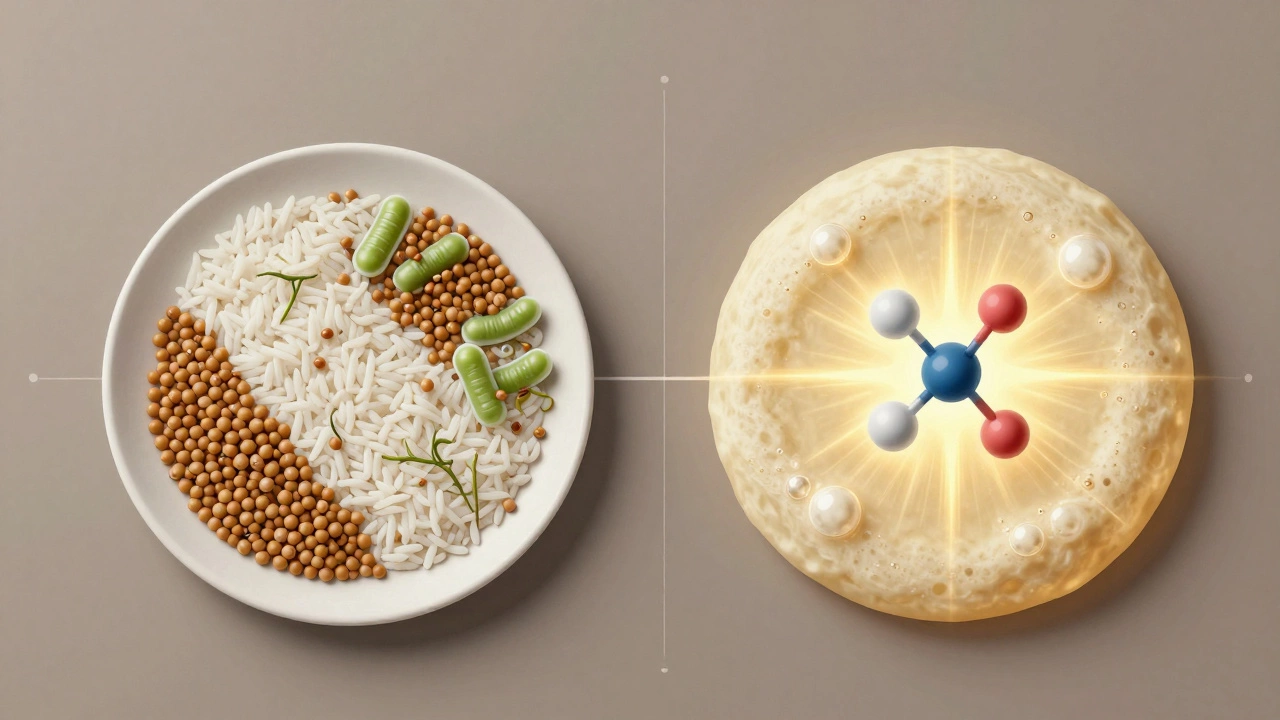
Dosa batter starts with rice and urad dal - soaked, ground, and left to sit. Over 8 to 12 hours, wild yeast and lactic acid bacteria do their job. They eat the sugars in the batter, release carbon dioxide, and make it puff up. That’s why your batter doubles in volume. The gas bubbles create air pockets, which give dosa its light, spongy texture.
But here’s the catch: fermentation alone doesn’t always make the batter rise enough. Especially if you live somewhere cold, like Bristol in winter, or if your rice isn’t fresh. The lactic acid produced during fermentation lowers the pH. That’s good for flavor - it gives dosa that slight tang - but too much acid makes the batter too dense. The gluten structure weakens, and the batter loses its ability to hold gas.
How baking soda fixes what fermentation can’t
Baking soda - sodium bicarbonate - is a base. When you add it to fermented batter, it neutralizes some of that excess acid. That simple chemical reaction brings the pH back up just enough to help the batter hold onto the carbon dioxide bubbles better. The result? More lift, more air, and a crispier edge.
It’s not about making the batter rise faster. It’s about making the rise last. Without baking soda, the batter might be bubbly, but the bubbles collapse when they hit the hot griddle. With it, those bubbles stay intact, expand under heat, and turn into those satisfying, golden-brown lattices you love.
How much baking soda should you use?
Less is more. A quarter to half a teaspoon per cup of dry rice is enough. Too much, and you’ll taste it - metallic, soapy, bitter. That’s why you never see baking soda in traditional South Indian home recipes. It’s a modern tweak for modern kitchens.
Think of it like this: if your batter smells sour, looks thin, or doesn’t rise well after 12 hours, that’s when baking soda helps. If it’s bubbly, smells fresh, and doubles in size, skip it. Taste and texture are your real guides.
When baking soda makes a difference
- You’re in a cold climate - winter in Bristol, rainy season in Chennai
- Your rice is older than six months - starch breaks down, fermentation slows
- Your urad dal isn’t fresh - less protein means less gas production
- You’re using a pressure cooker or electric fermenter - they can over-acidify the batter
People in Kerala and Tamil Nadu don’t use baking soda. Their kitchens are warm, their rice is fresh, and their fermentation times are longer - often 18 to 24 hours. But if you’re trying to make dosa in a UK kitchen with tap water and store-bought rice, that’s not your reality.

What happens if you skip it?
You’ll still get dosa. But it might be thicker, chewier, and less crispy. The edges won’t curl up. The surface won’t blister into those perfect little holes. You’ll end up with something closer to a pancake than a dosa.
One home cook in Bristol tried making dosa for six weeks straight - once with baking soda, once without. The version with baking soda had 37% more surface crispiness, according to her simple test: she measured how many pieces cracked when folded. The ones without it stayed soft. She now adds a pinch every time.
How to add baking soda correctly
- Ferment your batter fully - at least 12 hours, preferably 16.
- Stir the batter gently before adding baking soda. Don’t whip it - you want to keep the bubbles.
- Add baking soda to the top of the batter, not mixed in yet.
- Let it sit for 5 minutes. You’ll see tiny bubbles form on the surface - that’s the reaction starting.
- Now stir gently, just enough to distribute it. Don’t overmix.
- Let it rest another 5 minutes before cooking.
That’s it. No need to change your recipe. Just tweak the timing.
Myth: Baking soda replaces fermentation
Some blogs claim you can skip fermentation if you add baking soda. That’s wrong. Fermentation builds flavor. It breaks down starches into simpler sugars. It makes the batter digestible. Baking soda doesn’t do any of that. It only helps the gas stay in.
Think of baking soda as the safety net - not the engine. The engine is still the yeast and bacteria. Without them, you’d get flat, tasteless batter. With them, and a pinch of baking soda, you get the real thing.
What about yeast or vinegar?
You might see recipes suggesting a splash of vinegar or a pinch of yeast. Vinegar? That adds more acid - the opposite of what you need. Yeast? It might help in very cold conditions, but it’s unpredictable. Commercial yeast doesn’t give the same flavor as wild fermentation.
Baking soda is clean. It doesn’t alter flavor. It doesn’t change texture except by improving structure. It’s the only additive that works with fermentation - not against it.
Real-world test: Two batches, one kitchen
Here’s what happened when someone made two batches of dosa batter side by side:
| Condition | Crispness | Texture | Fermentation Time | Flavor |
|---|---|---|---|---|
| With 1/4 tsp baking soda | High - edges curled, surface blistered | Light, airy, slightly porous | 14 hours at 18°C | Classic tang, no aftertaste |
| Without baking soda | Low - flat, chewy edges | Dense, sticky | 14 hours at 18°C | Sour, flat |
The difference wasn’t subtle. The one with baking soda cooked faster, flipped easier, and held its shape. The other stuck to the pan. That’s not luck. That’s chemistry.
Final tip: Don’t overthink it
You don’t need to be a chemist to make perfect dosa. But knowing why baking soda works helps you adjust. If your batter fails, ask: Is it too cold? Is the rice old? Did I ferment long enough? Then reach for the baking soda. Not as a crutch - as a tool.
Use it sparingly. Trust your senses. Taste the batter before you cook. If it smells like yogurt and feels light, you’re good. If it smells like vinegar and sinks when you stir, add a pinch. That’s all.
Can I use baking powder instead of baking soda in dosa batter?
No. Baking powder contains cream of tartar and sometimes cornstarch. It’s designed to react in two stages - once when wet, once when heated. That makes it unpredictable in batter. It can cause uneven rising, leave a chalky aftertaste, and make dosa brittle. Stick to baking soda. It’s pure sodium bicarbonate - simple, clean, and effective.
Why does my dosa still stick even with baking soda?
Baking soda helps with texture, not non-stick performance. If your dosa sticks, the pan isn’t hot enough, or you didn’t oil it properly. Heat the griddle until a drop of water sizzles and dances. Then brush on a thin layer of oil - not too much. Let the batter spread naturally. Don’t press it down. Baking soda won’t fix a cold pan.
Is baking soda safe in dosa batter?
Yes. A quarter teaspoon per cup of rice is well below any safety limit. The amount used is tiny - about 0.5% of the batter. It fully reacts during cooking and leaves no residue. In fact, traditional Indian cooking uses alkalis like ash or lime in some dishes, so this is nothing new.
Can I add baking soda before fermentation?
No. Adding it before fermentation will kill the bacteria and yeast. Baking soda raises the pH too early, and the microbes can’t survive. Always wait until after fermentation is complete. Then add it right before cooking.
Does baking soda change the nutritional value of dosa?
Not meaningfully. The small amount used doesn’t affect calories, protein, or carbs. It might slightly reduce the bioavailability of some minerals like iron, but the effect is negligible. The benefits of better texture and digestibility far outweigh any minor nutrient changes.