Meat Consumption Comparison Calculator
Your Meat Consumption
India's Unique Consumption Pattern
India has the world's lowest per capita meat consumption at less than 4 kg per person annually. That's less than a single chicken. This is significantly lower than:
- United States: 80-90 kg
- Australia: 80-90 kg
- Germany: 60 kg
- Brazil: 40 kg
Your Comparison Results
Compared to India's average:
Environmental impact:
Protein sources comparison:
Your dietary impact:
When you think of countries that eat the least meat, you might picture remote islands or Nordic forests. But the real answer lies in South Asia-specifically, India. It’s not just a trend here; it’s a cultural norm shaped by religion, economics, and generations of tradition. India has the lowest per capita meat consumption in the world, with the average person eating less than 4 kilograms of meat per year. That’s less than a single chicken. Meanwhile, countries like the U.S. and Australia hover around 80 to 90 kilograms per person annually. Why does this gap exist? And how does it shape what’s on millions of plates every day?
Why India Eats So Little Meat
India’s low meat consumption isn’t due to lack of access or poor farming. It’s because of deep-rooted beliefs. About 80% of Indians are Hindu, and for many, cows are sacred. Killing a cow is not just illegal in many states-it’s morally unacceptable. Jainism and Buddhism, also practiced widely in India, emphasize non-violence toward all living beings. Even among Muslims, who make up about 15% of the population, meat consumption is often limited by income, not preference. In rural areas, many families can’t afford meat daily. In cities, it’s often reserved for special occasions.
According to the Food and Agriculture Organization (FAO), India’s per capita meat consumption has hovered around 3.5 to 4.2 kg since 2010. For comparison, Brazil eats over 40 kg, Germany over 60 kg. Even Bangladesh, a neighboring country with similar poverty levels, eats nearly double the meat. The difference? Cultural norms. In India, a vegetarian meal isn’t a compromise-it’s the default.
What Do Indians Eat Instead?
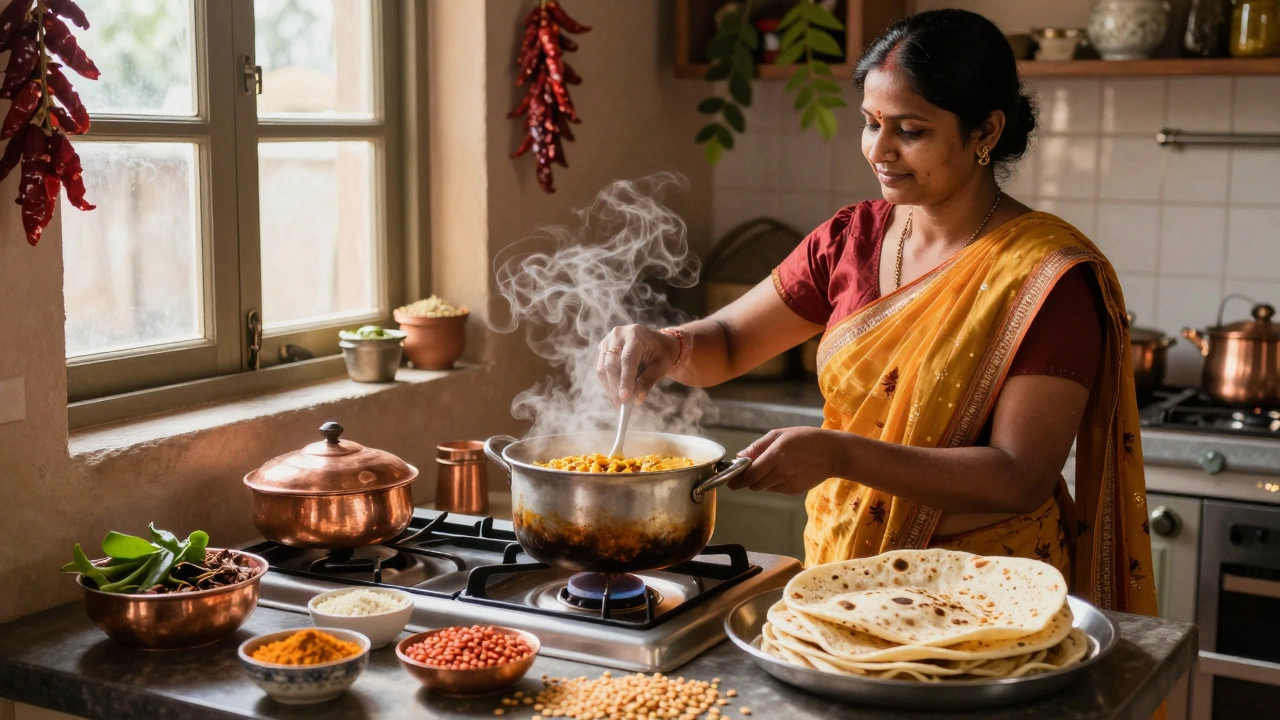
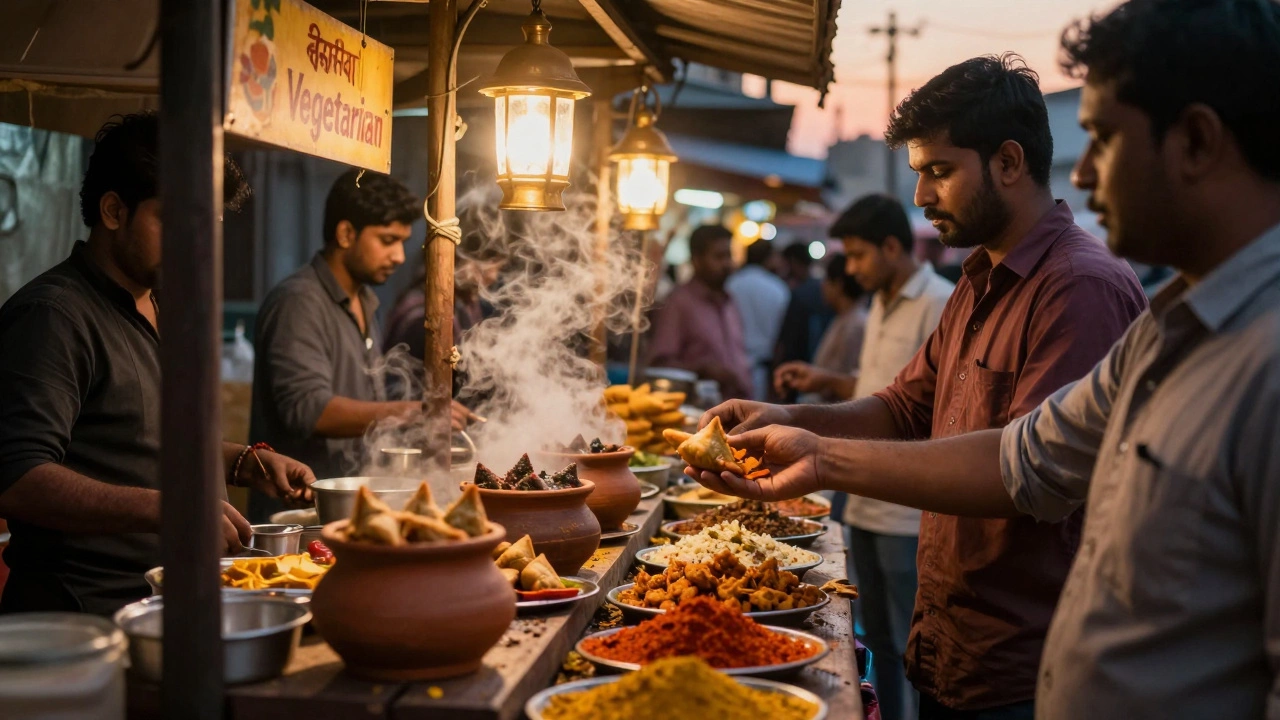
Indian cuisine doesn’t just avoid meat-it reinvents flavor without it. Lentils, beans, chickpeas, and legumes form the backbone of daily meals. Dal (lentil stew) is eaten by over 90% of households, often twice a day. It’s served with rice, roti, or both. Paneer, a fresh Indian cheese, is fried, grilled, or simmered in spiced tomato sauces. It’s rich, filling, and replaces meat in everything from curries to kebabs.
Vegetables aren’t just side dishes-they’re the main event. Cauliflower gets roasted with turmeric and cumin. Eggplant is slow-cooked in mustard oil until it melts. Spinach, potatoes, and peas are mashed into thick curries called saag and aalu gobi. Even snacks are meat-free: samosas stuffed with spiced potatoes, pakoras made from chickpea flour, and chana chaat (spiced chickpeas with tamarind sauce).
Many of these dishes have been perfected over centuries. The ancient Ayurvedic texts, dating back over 3,000 years, promoted plant-based diets for balance and health. Modern science now backs this up. Studies from the Indian Council of Medical Research show that vegetarian diets in India are linked to lower rates of heart disease, diabetes, and obesity compared to meat-heavy diets elsewhere.
The Role of Religion and Festivals
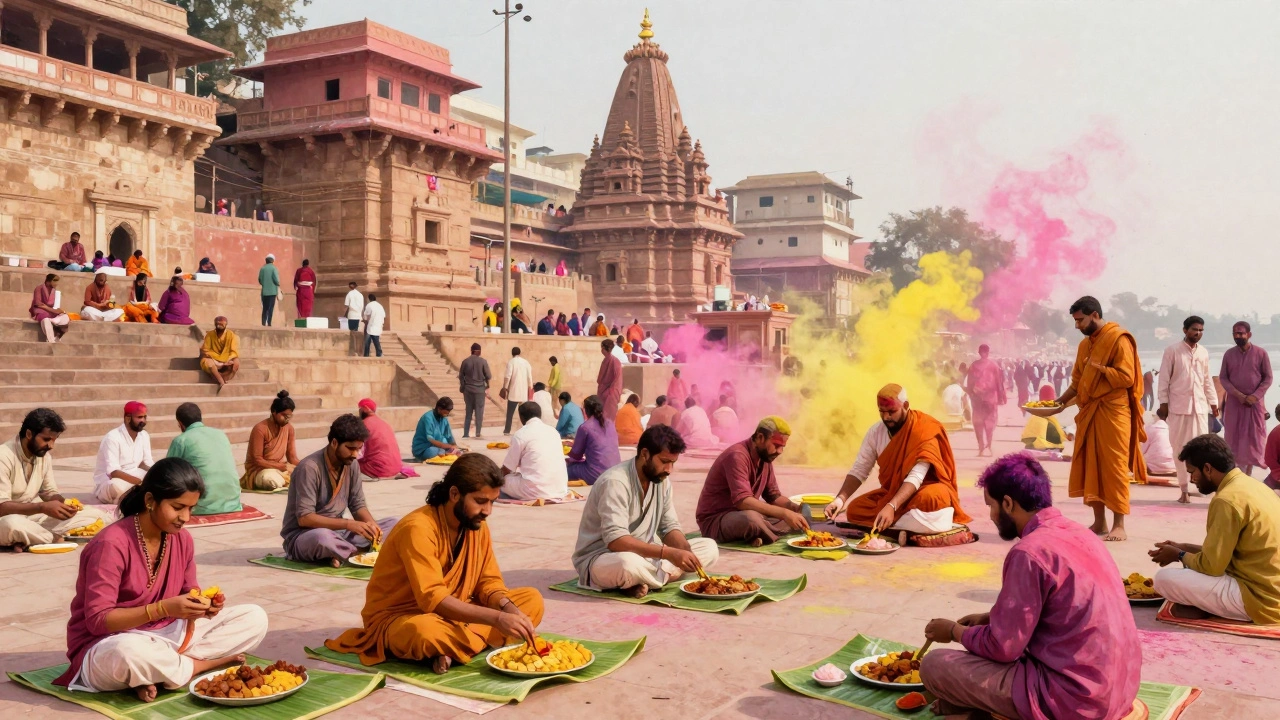
Religion isn’t just a belief system-it shapes grocery lists. During Navratri, millions of Hindus fast and eat only vegetarian food for nine days. In Jain households, root vegetables like potatoes and onions are avoided because harvesting them kills the plant. Some families eat eggs but never meat. Others avoid even honey. These aren’t extremes-they’re everyday choices.
Festivals like Diwali and Holi are centered around sweets and snacks, not roasts or grills. Traditional dishes like shrikhand (strained yogurt with saffron), gulab jamun (fried dough balls in syrup), and khichdi (rice and lentils cooked with turmeric) dominate the table. Meat is rarely part of the celebration. In fact, many temples in India serve only vegetarian meals to pilgrims-sometimes tens of thousands of meals a day.
How This Affects Global Food Trends
India’s plant-based eating isn’t just local-it’s influencing global markets. The world’s largest plant-based food company, Beyond Meat, launched its first Indian product line in 2024, tailored to local spices like garam masala and cumin. Supermarkets in Delhi and Mumbai now stock plant-based kebabs that taste like chicken tikka. But here’s the twist: most Indians don’t need these products. They’ve been eating delicious, protein-rich vegetarian meals for centuries.
Western countries are scrambling to catch up. In 2025, a UN report ranked India as the top country for sustainable protein intake, thanks to its reliance on lentils, soy, and nuts. These foods require far less water and land than livestock. India’s food system produces 15 times more protein per acre than beef farming. That’s why global climate experts now look to India-not just for cultural insight, but for practical solutions.
Myths About Indian Vegetarianism
One common myth is that all Indians are vegetarian. That’s not true. Around 20% of Indians eat meat regularly, mostly fish, chicken, and goat. But even among meat-eaters, portions are small, and frequency is low. Another myth is that vegetarian diets in India are boring or lacking protein. They’re not. A single serving of dal provides 18 grams of protein. A cup of chickpeas has 15 grams. Add yogurt, nuts, and whole grains, and you’ve got more than enough.
Some assume India’s low meat consumption is due to poverty. But that’s outdated. Middle-class families in cities like Pune and Bangalore eat vegetarian meals not because they can’t afford meat, but because they choose to. A 2023 survey by the National Sample Survey Office found that 62% of urban vegetarians cited health, ethics, or taste as their top reasons-not cost.
What You Can Learn From India’s Plate
If you’re trying to eat less meat, India offers more than inspiration-it offers a blueprint. Start by replacing one meat meal a week with dal or chana masala. Swap beef for lentils in tacos. Try paneer instead of chicken in stir-fries. Use spices like cumin, coriander, and asafoetida to build deep flavor without meat.
You don’t need to go fully vegetarian to benefit. Even cutting meat by 30%-the average Indian’s intake-can lower your carbon footprint by up to 20%. And you’ll likely eat more fiber, antioxidants, and healthy fats. The Indian plate proves that flavor doesn’t come from meat. It comes from technique, tradition, and time.
Simple Indian Dishes to Try
- Chana Masala - Spiced chickpeas with tomatoes, onions, and garam masala. High in protein and fiber.
- Palak Paneer - Spinach and cottage cheese in a creamy, spiced sauce. Packed with iron and calcium.
- Vegetable Biryani - Fragrant rice layered with carrots, peas, potatoes, and whole spices. No meat needed.
- Dal Tadka - Lentils tempered with mustard seeds, garlic, and curry leaves. The most common Indian meal.
- Moong Dal Khichdi - Rice and yellow lentils cooked together with turmeric. Comfort food with healing properties.
These dishes don’t require fancy tools or hard-to-find ingredients. Most use pantry staples you already have. And they’re cheaper than buying meat every day.
Why does India have such low meat consumption compared to other countries?
India’s low meat consumption stems from a combination of religious beliefs, economic factors, and long-standing cultural traditions. Hinduism, Jainism, and Buddhism promote non-violence toward animals, leading millions to avoid meat entirely. Cows are considered sacred in Hinduism, making beef consumption taboo. Even among non-vegetarians, meat is often reserved for special occasions due to cost. The average Indian eats less than 4 kg of meat per year, far below global averages.
Are all Indians vegetarian?
No, not all Indians are vegetarian. About 20% of the population eats meat regularly, mostly chicken, fish, and goat. However, even among meat-eaters, consumption is low-often once a week or less. Vegetarianism is widespread, with over 38% of Indians identifying as vegetarian, the highest percentage in the world. Many families have mixed diets, where some members eat meat and others don’t.
Do Indian vegetarian diets lack protein?
No, Indian vegetarian diets are rich in protein. Lentils (dal), chickpeas (chana), soy, paneer (Indian cottage cheese), yogurt, and nuts are daily staples. A single serving of dal provides 18 grams of protein, and a cup of chickpeas has 15 grams. Combined with rice, roti, and vegetables, these meals easily meet daily protein needs without meat. Studies confirm that vegetarians in India have adequate or even higher protein intake than meat-eaters in Western countries.
Is India’s low meat consumption due to poverty?
While income plays a role in rural areas, poverty is not the main reason. In cities like Delhi, Mumbai, and Bangalore, middle-class families choose vegetarian diets for health, ethics, or taste-not cost. A 2023 survey found that 62% of urban vegetarians cited personal values over affordability. Many plant-based foods like lentils and rice are cheaper than meat, but the choice is often intentional, not forced.
Can I adopt Indian vegetarian eating habits even if I’m not from India?
Absolutely. Indian vegetarian cuisine is flavorful, affordable, and easy to adapt. Start by replacing one meat meal a week with dal, chana masala, or paneer curry. Use spices like cumin, turmeric, and garam masala to build depth without meat. These dishes are naturally high in fiber, protein, and antioxidants. You don’t need to go fully vegetarian-just eating less meat can improve your health and reduce your environmental impact.
Next Steps
If you’re curious about reducing meat without giving up flavor, begin with one Indian dish a week. Try making dal tadka-it takes 20 minutes, uses five ingredients, and costs less than $2 per serving. Keep a food journal: note how you feel after eating plant-based meals. You might be surprised how satisfying they are.
And if you’re thinking about sustainability, remember this: India’s food system feeds over 1.4 billion people with minimal environmental cost. That’s not luck-it’s a model. You don’t need to copy everything. Just borrow one idea: let plants lead the plate.