Biryani Regional Styles Comparison Tool
Discover the unique characteristics of different biryani styles from across India. Select the styles you want to compare and see how they differ in spices, ingredients, and cooking methods.
Regional Biryani Comparison
Key Differences
Spice Level
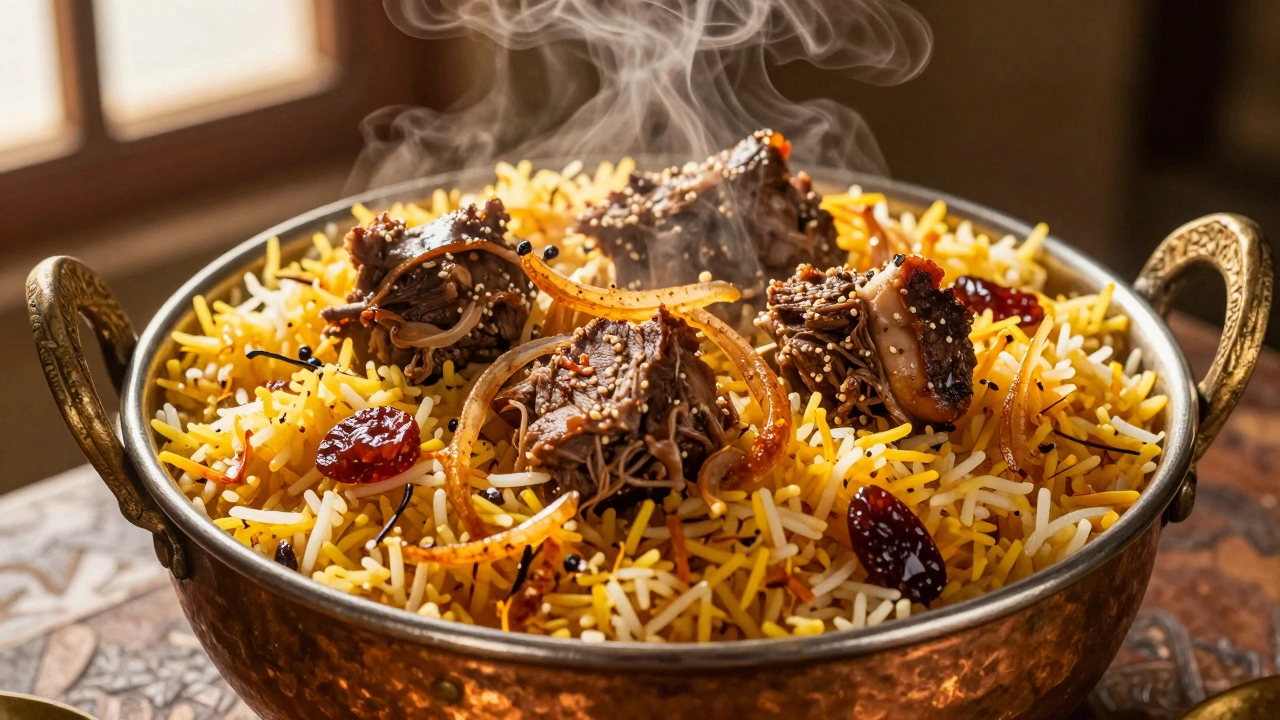
Ask anyone around the world what Indian food is, and chances are they’ll name one dish before anything else. It’s not just popular-it’s iconic. The answer isn’t spicy curry, nor is it samosas or dosas. It’s biryani. This layered rice dish, with its fragrant spices, tender meat or vegetables, and golden saffron threads, is India’s most famous food. Not because it’s the spiciest or the oldest, but because it’s the one that travels. It shows up at weddings in Delhi, street stalls in Mumbai, family dinners in Chennai, and even in London kitchens where people who’ve never set foot in India make it on Sundays.
Why Biryani Stands Above the Rest
India has hundreds of regional dishes. There’s dal makhani from Punjab, chole bhature from Delhi, idli sambar from Tamil Nadu, and pani puri from the streets of Rajasthan. But none of them have the same universal recognition as biryani. Why? Because biryani isn’t just a meal-it’s an experience. It’s cooked slowly, layered by hand, sealed with dough, and then slow-cooked so the flavors melt together. The aroma alone pulls people in.
Unlike other dishes that stay local, biryani has regional versions that are famous worldwide. Hyderabadi biryani uses basmati rice, marinated meat, and a touch of kewra water. Lucknowi biryani is milder, with dum cooking and delicate spices. Kolkata biryani adds boiled eggs and potatoes, a legacy of British colonial influence. And then there’s the vegetarian version-veg biryani with carrots, peas, and cashews-that’s just as loved.
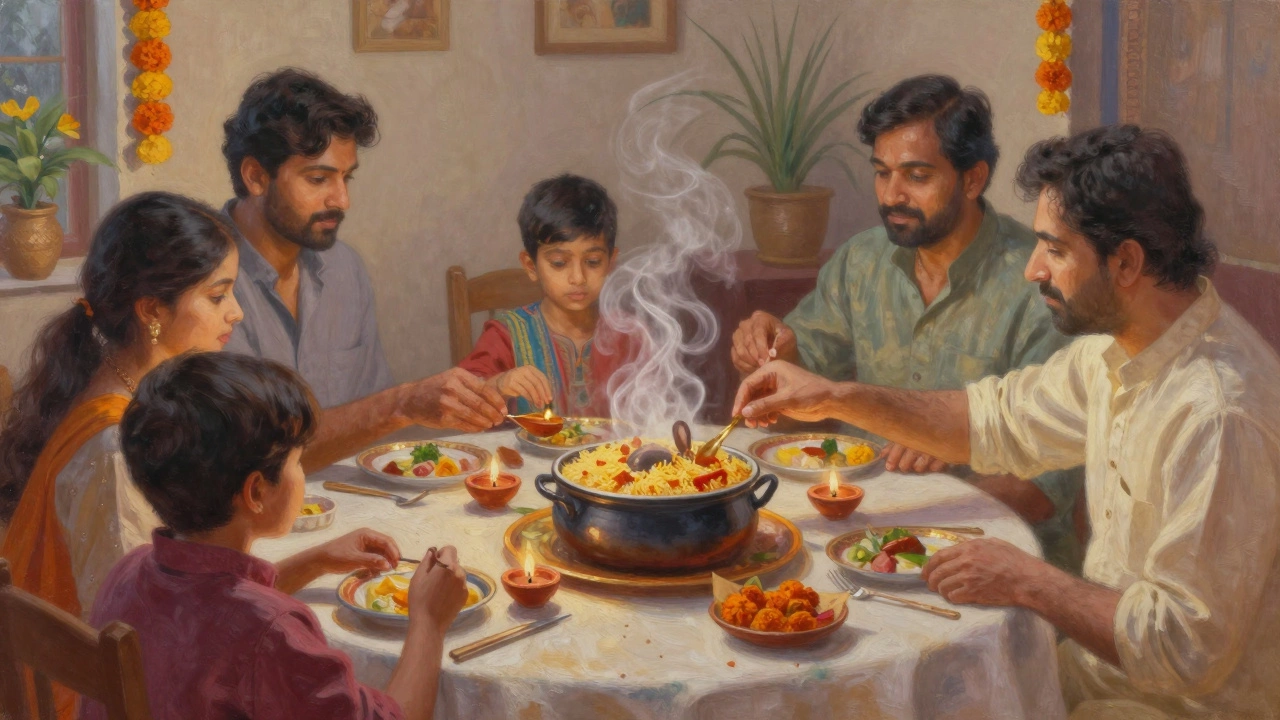
It’s served at every major celebration. Birthdays, weddings, Eid, Diwali-biryani is on the table. Even in Indian households abroad, if there’s one dish that gets made for guests, it’s biryani. It’s the dish that says, ‘This is India.’
How Biryani Became a National Symbol
The story of biryani starts in the Mughal courts. The word comes from the Persian word ‘birian,’ meaning ‘fried before cooking.’ When Persian chefs came to India with the Mughal emperors, they brought their rice dishes. Over time, local ingredients changed the recipe. Indian spices like cardamom, cloves, cinnamon, and star anise were added. Basmati rice, grown in the foothills of the Himalayas, replaced shorter grains. Meat was slow-cooked with yogurt and onions until it fell off the bone.
By the 18th century, biryani had split into distinct styles based on region. In Hyderabad, the Nizams turned it into a royal art. In Bengal, it became a festive staple. In Tamil Nadu, they added curry leaves and coconut. Each version tells a story of culture, trade, and adaptation.
Today, biryani is so deeply woven into India’s identity that it’s been listed as a cultural heritage dish by the Indian government. It’s not just food-it’s history on a plate.
What Makes Biryani Different From Other Rice Dishes
People often confuse biryani with pulao. But they’re not the same. Pulao is a one-pot dish where rice and ingredients are cooked together. Biryani is layered. You cook the rice halfway, fry the meat or veggies with spices, then stack them in a pot, sprinkle saffron milk and fried onions, seal it tight, and let it steam slowly. That’s called dum cooking. The steam locks in flavor and keeps everything moist.
Here’s what sets biryani apart:
- Layering: Rice and meat are never mixed until the end.
- Spice blend: Whole spices like bay leaves, mace, and black stone flower are toasted before grinding.
- Saffron and rose water: These aren’t optional-they’re signature.
- Fried onions: Crispy, caramelized onions add sweetness and crunch.
- Dum cooking: The sealed pot traps steam, cooking the dish gently.
That’s why a poorly made biryani tastes bland. A good one? It makes you close your eyes after the first bite.
The Real Test: Where to Find the Best Biryani in India
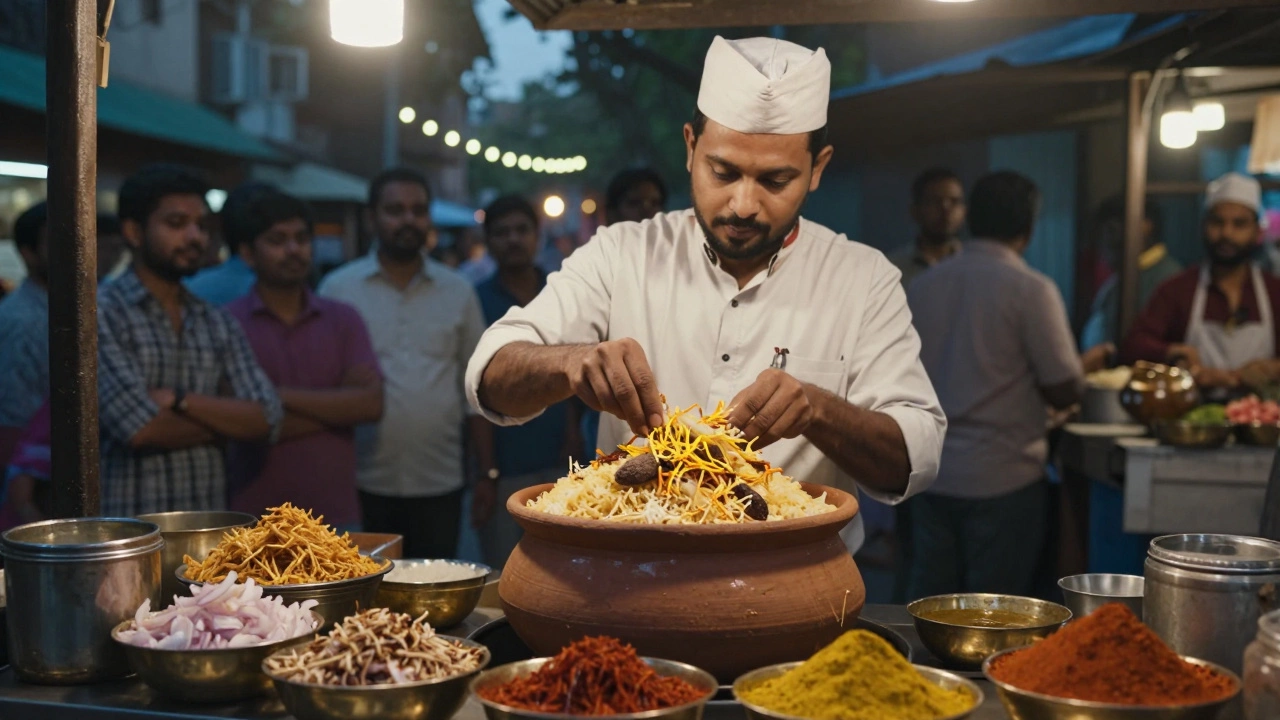
If you want to taste the real thing, you don’t need to go to a fancy restaurant. Some of the best biryani is made in small kitchens, street stalls, or homes. Here are a few places known for their legendary biryani:
- Hyderabad: Nandu’s Biryani or Paradise Restaurant. Their Hyderabadi biryani uses goat meat, aged spices, and a secret blend of dry fruits.
- Kolkata: Aminia or Nizam’s. Their biryani includes potatoes and boiled eggs-something you won’t find elsewhere.
- Lucknow: Tunday Kababi. Their Awadhi biryani is subtle, with rose petals and a whisper of saffron.
- Delhi: Karim’s near Jama Masjid. Their Mughlai-style biryani has rich yogurt marinades and slow-cooked lamb.
Each place has its own recipe, passed down for generations. No two biryanis are exactly alike. But they all share the same soul.
Can You Make Biryani at Home?
Yes. And you don’t need a fancy pot or a chef’s training. The key is patience. Start with good basmati rice-soak it for 30 minutes. Use fresh whole spices, not pre-ground. Fry onions slowly until they’re deep brown, not burnt. Marinate the meat overnight with yogurt, ginger-garlic paste, and turmeric. Layer the rice and meat in a heavy-bottomed pot. Seal it with dough or foil. Cook on low heat for 45 minutes. Let it rest for 10 minutes before opening.
Most people think biryani is hard. It’s not. It just takes time. And that’s the point. You can’t rush flavor.
What People Get Wrong About Biryani
There are myths floating around. One is that biryani is always spicy. It’s not. The heat comes from green chilies or red chili powder, but many versions are mild. Another myth is that it’s always meat-based. Vegetarian biryani is just as common, especially in South India.
Some restaurants serve biryani with a side of raita and salad. That’s fine. But the real tradition? Eat it plain. Let the spices speak for themselves. A good biryani doesn’t need sauce.
And no, you don’t need to use chicken. Lamb, goat, beef, fish, or even jackfruit can be used. The rice is the canvas. Everything else is the paint.
Why Biryani Will Always Be India’s Top Dish
It’s not just about taste. Biryani is memory. It’s the smell of your grandmother’s kitchen on a Sunday. It’s the first dish you ate at a wedding. It’s the one you made for your first dinner party. It’s the dish that connects families across borders.
In 2023, a survey by the Indian Council of Agricultural Research found that 87% of Indians named biryani as their favorite dish. Even among children under 18, it ranked higher than pizza or burgers. It’s not a trend. It’s tradition.
And in places like Bristol, where you’re reading this, Indian restaurants that serve biryani have the longest waitlists. It’s not because it’s trendy. It’s because it’s real.
Biryani doesn’t need a marketing campaign. It doesn’t need influencers. It just needs to be made with care. And when it is? It speaks louder than any slogan ever could.
Is biryani the most popular Indian dish in the world?
Yes. While dishes like curry and tandoori chicken are well-known abroad, biryani is the one most consistently chosen as India’s signature dish in global food surveys. It’s the top-selling Indian dish in the UK, US, and Australia. Restaurants in over 80 countries list biryani as their most ordered item.
Can I make biryani without meat?
Absolutely. Vegetable biryani is very common, especially in South India and among vegetarian families. Use carrots, peas, potatoes, cauliflower, and cashews. Add a pinch of asafoetida for depth. The cooking method stays the same-layering, dum cooking, saffron, and fried onions. It’s just as flavorful.
What’s the difference between Hyderabadi and Lucknowi biryani?
Hyderabadi biryani is bold-spicy, with fried onions, dried fruit, and a rich red color from Kashmiri chilies. Lucknowi biryani is delicate. It uses fewer spices, more yogurt, and a hint of rose water. The meat is cooked separately and layered gently. Hyderabadi is fiery; Lucknowi is fragrant.
Why is saffron used in biryani?
Saffron gives biryani its golden color and a subtle floral aroma. It’s expensive, so many home cooks use a pinch. But it’s not just for looks-it balances the heat of the spices and adds a layer of richness. If you skip it, the dish still tastes good, but it won’t be authentic.
Can I use brown rice for biryani?
You can, but it won’t be traditional. Brown rice takes longer to cook and doesn’t absorb flavors the same way basmati does. It’s also chewier. If you’re going for health, use parboiled basmati-it’s higher in fiber and still cooks like white rice. Brown rice changes the texture too much for a classic biryani.