Curry Spice Master & Recipe Builder
Click on a spice card to reveal its role, flavor profile, and usage tips.
Turmeric (Haldi)
The FoundationProvides signature color and anti-inflammatory properties.
Role: Color anchor.
Tip: Bloom in hot oil for 30 seconds to release curcumin.
Cumin (Jeera)
Earthy BaseWarm, nutty depth that makes curry comforting.
Role: Soul of the dish.
Tip: Use whole seeds at start, ground later.
Coriander (Dhaniya)
Bright ConnectorCitrusy, floral notes that cut through richness.
Role: Prevents flatness.
Tip: Freshly grind seeds if possible.
Garam Masala
Aromatic FinishComplex blend of warm spices added at the end.
Role: Perfume/Topping.
Tip: Add just before serving to keep aroma.
1. The Start (Tempering)
Cumin Seeds (Whole)
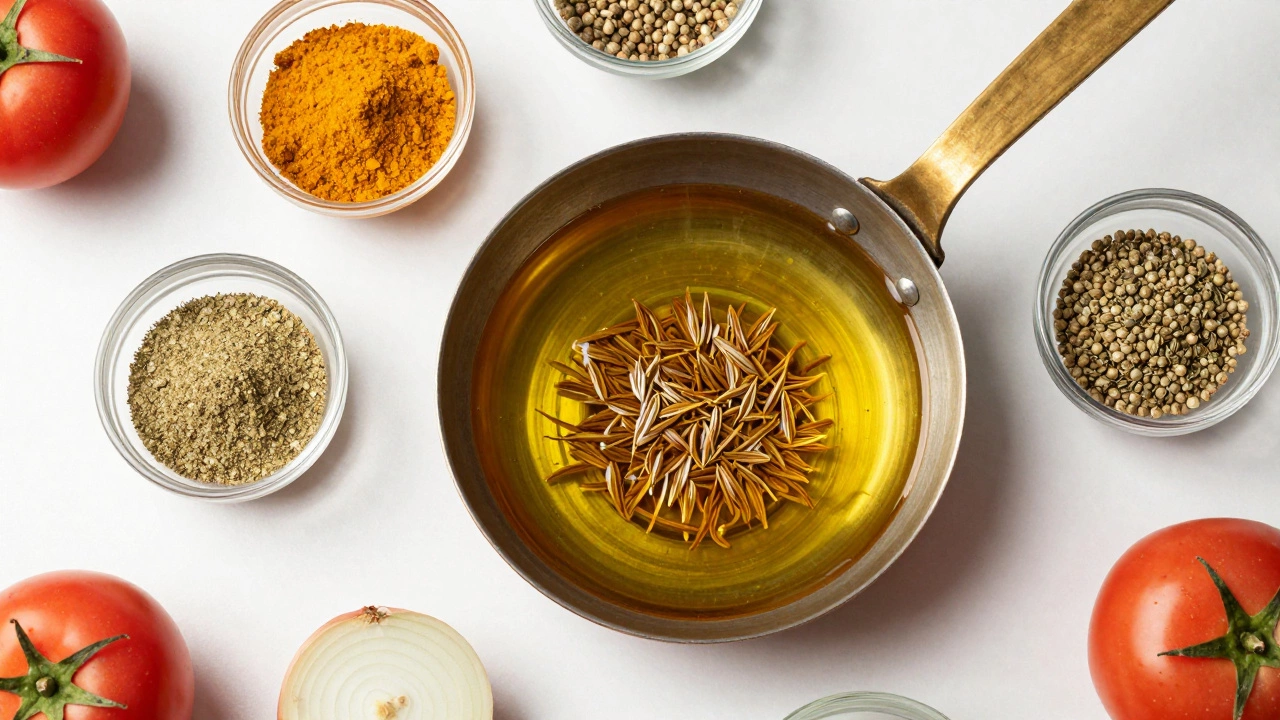
Add to hot oil/ghee. Listen for the sizzle/pop. This releases essential oils into the fat.
2. The Base (Bloom)
Turmeric & Ground Cumin
Add after onions/tomatoes. Cook briefly (bloom) to activate flavors and brighten color.
3. The Body (Simmer)
Coriander (Ground)
Add with aromatics or liquid. It blends seamlessly and provides the citrusy lift during simmering.
4. The Finish (Serve)
Garam Masala
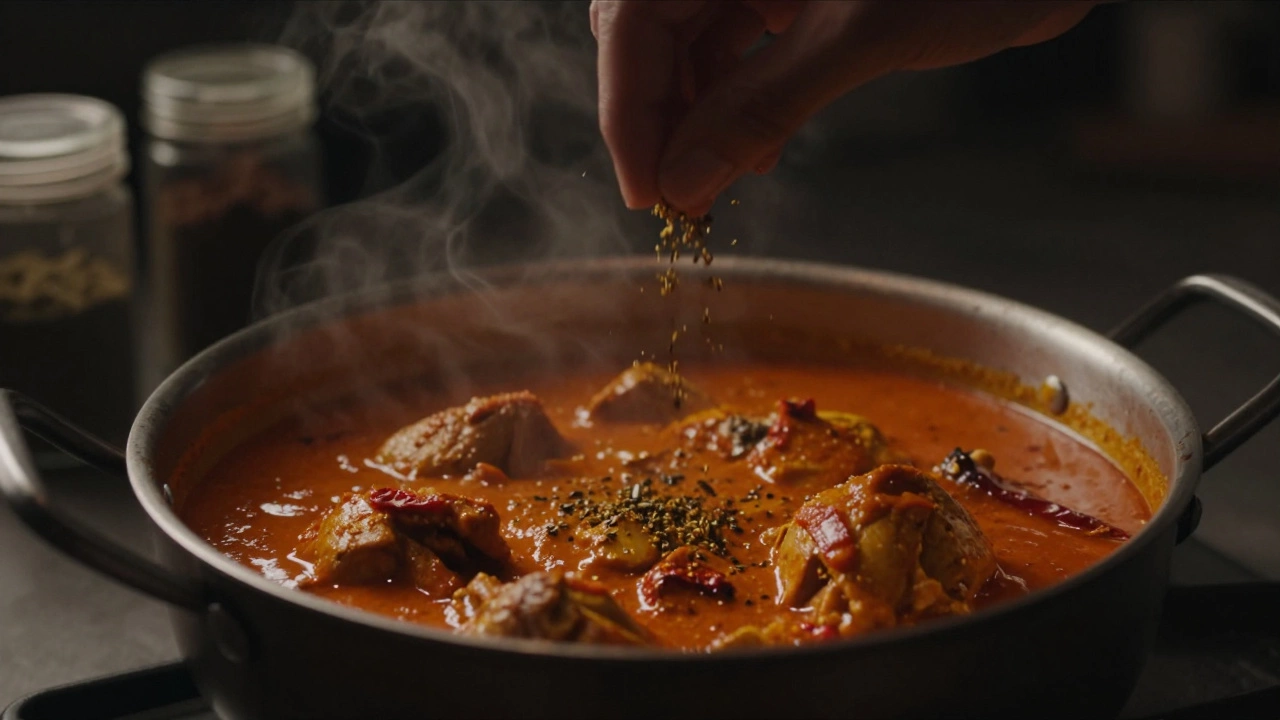
Sprinkle over the finished dish right before serving. Do not boil this blend or you lose the aroma.
| Ingredient | Amount | Ratio Part |
|---|
Walk into any Indian kitchen in Bristol or Mumbai, and you’ll smell a complex, warming aroma that hits you before you even see the pot. It’s not just one spice; it’s a symphony. But if you’re standing in your pantry staring at a jar of yellow powder and wondering where to start, the question is simple: what are the four main spices in curry?
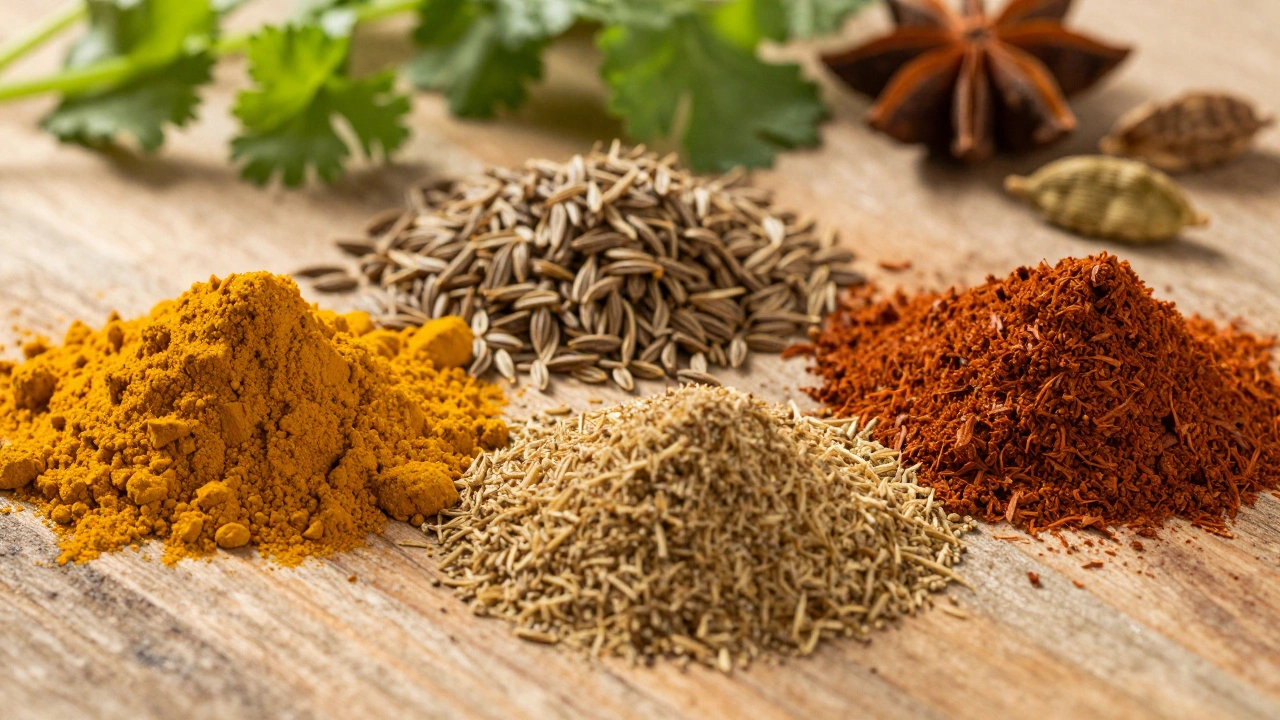
The short answer? Turmeric, cumin, coriander, and garam masala. These four form the backbone of most home-style curries. They provide the color, the earthy depth, the citrusy brightness, and the final aromatic punch. Get these right, and your chicken curry will taste like it simmered for hours, even if it only took thirty minutes.
The Foundation: Turmeric (Haldi)
Turmeric is a vibrant yellow root spice that provides the signature color and anti-inflammatory properties to curry dishes. Also known as Haldi, it is native to Southeast Asia and has been used in Ayurvedic medicine for thousands of years.If you’ve ever made a curry that looked gray or dull, turmeric was likely missing. This spice is the artist’s brushstroke on the canvas of your dish. It doesn’t have the strongest flavor profile on its own-it’s mild, slightly bitter, and peppery-but it does two critical jobs. First, it gives curry that iconic golden-yellow hue. Second, it acts as a flavor anchor, allowing other spices to shine without clashing.
In a typical chicken curry recipe, you only need about half a teaspoon for four servings. Too much, and your dish will taste muddy and metallic. The key is to bloom it. That means cooking it in hot oil or ghee for 30 seconds before adding onions or tomatoes. This releases the curcumin, the active compound, and ensures the color stays bright throughout the cooking process.
The Earthy Base: Cumin (Jeera)
Cumin is an aromatic seed with a warm, nutty, and earthy flavor that serves as a foundational element in many global cuisines. In Hindi, it is called Jeera, and it is often toasted whole before being ground or added to tempering oils.While turmeric handles the visuals, cumin handles the soul. It brings that deep, smoky, earthy note that makes curry feel comforting. You can use cumin seeds or ground cumin, but they behave differently. Whole seeds are usually tempered in hot oil at the very beginning of cooking-a technique called *tadka* or *chaunk*. Listen for the sizzle; when the seeds pop, they release their essential oils into the fat, which then coats every ingredient in the pot.
Ground cumin, on the other hand, is added later, often with the onions or tomatoes. It adds a heavier, more immediate earthiness. For a balanced chicken curry, I recommend using both. Start with half a teaspoon of whole seeds in the oil, and add another half teaspoon of ground cumin when you sauté the aromatics. This layering creates a complexity that single-form cumin can never achieve.
The Bright Connector: Coriander (Dhaniya)
Coriander is a versatile spice derived from the seeds of the cilantro plant, offering a citrusy, floral, and slightly sweet flavor. Known as Dhaniya in India, it is distinct from the fresh leaves (cilantro) used as garnish, though they come from the same plant.This is the unsung hero of curry. If cumin is the bass line, coriander is the melody. It has a subtle citrusy, lemony quality that cuts through the richness of coconut milk, yogurt, or tomato-based sauces. Without coriander, curry tastes flat and one-dimensional. With it, the flavors lift and expand.
Most home cooks use ground coriander because it blends seamlessly into the sauce. Use it generously-often equal parts to cumin. It’s forgiving and won’t overpower. However, if you want to elevate your game, toast whole coriander seeds lightly in a dry pan until they smell fragrant, then grind them fresh. The difference is night and day. Freshly ground coriander has an aromatic intensity that pre-ground powder, which sits on shelves for months, simply lacks.
The Aromatic Finish: Garam Masala
Garam Masala is a blend of ground spice mixtures used in Indian cuisine, typically including cardamom, cinnamon, cloves, and black pepper. The term translates to "warm spices", referring to the body-heating properties attributed to the ingredients in Ayurveda.Here’s where people get confused. Is garam masala a spice or a blend? It’s a blend, but it functions as a single entity in curry recipes. Unlike the previous three, which are cooked into the base, garam masala is almost always added at the end. Why? Because its components-cardamom, cinnamon, cloves, black pepper, and sometimes nutmeg-are volatile. Their delicate aromas evaporate if cooked too long.
Think of garam masala as the perfume of your curry. Sprinkle it over the finished dish, just before serving. It adds warmth and a hint of sweetness and heat that ties all the other flavors together. A quarter teaspoon goes a long way. Too much, and your curry will taste like Christmas cake. The goal is subtlety. You should smell it immediately upon lifting the lid, but not necessarily taste individual notes of clove or cinnamon.
| Spice | Primary Role | Flavor Profile | When to Add |
|---|---|---|---|
| Turmeric | Color & Antioxidant Base | Mild, Earthy, Slightly Bitter | Early (Bloomed in Oil) |
| Cumin | Depth & Warmth | Nutty, Smoky, Earthy | Start (Seeds) & Middle (Ground) |
| Coriander | Brightness & Balance | Citrusy, Floral, Sweet | Middle (With Onions/Tomatoes) |
| Garam Masala | Aromatic Finish | Warm, Complex, Spicy-Sweet | End (Just Before Serving) |
Why "Four" Spices? What About Chili or Garlic?
You might be thinking, "But what about chili powder? Or garlic and ginger?" Those are aromatics and heat agents, not structural spices. Garlic and ginger are vegetables in the culinary sense-they form the wet base of the curry. Chili powder (or Kashmiri red chili) provides heat and color, but it varies wildly by region. Some curries are mild; others are fiery. The four spices listed above, however, are consistent across North Indian, South Indian, and even some Southeast Asian curries. They are the universal language of curry.
If you were to remove chili, you’d have a mild curry. If you removed turmeric, cumin, coriander, or garam masala, you wouldn’t have a curry at all. You’d have a stew. That’s the distinction.
Common Mistakes Home Cooks Make
I’ve seen this happen in kitchens all over Bristol. People buy expensive spice jars and let them sit for two years. Spice potency fades quickly after grinding. Oxygen, light, and heat are enemies. If your cumin smells like dust, it is dust. Replace your spices every six to eight months. Buy small quantities from reputable Indian grocers rather than large containers from supermarkets.
Another mistake is adding everything at once. Dumping all four spices into the pot at the start kills the nuance. Turmeric and cumin can handle heat. Coriander needs gentle cooking. Garam masala must survive. Respect the timing. Layering isn’t just a fancy chef trick; it’s chemistry. Different compounds release at different temperatures. By staggering your additions, you ensure that every note is heard.
How to Build Your Own Curry Blend
If you don’t want to measure four separate jars every time you cook, make your own base blend. Mix:
- 2 parts ground coriander
- 1 part ground cumin
- 1 part turmeric
- 1 part Kashmiri red chili powder (optional, for color and mild heat)
Store this in an airtight container away from light. When you cook your chicken curry, sauté onions, add this blend, then tomatoes and chicken. Finish with garam masala and fresh cilantro. It’s foolproof.
Fresh vs. Ground: Does It Matter?
Yes, but not as much as you think. Freshly ground spices are superior, no doubt. But for everyday cooking, high-quality pre-ground spices work fine if they are fresh. The biggest impact comes from blooming them correctly. Cooking ground spices in fat activates their flavor compounds better than stirring them into water or sauce alone. Always give your spices 60 seconds in hot oil before adding liquids. This step alone will transform your curry from bland to restaurant-quality.
Can I substitute garam masala with just cinnamon and cloves?
Not really. While cinnamon and cloves are key components, garam masala also includes cardamom, black pepper, and sometimes nutmeg or mace. Using only cinnamon and cloves will make your curry taste overly sweet and medicinal. Stick to a proper blend for balance.
Why does my curry turn brown instead of yellow?
This usually happens if you don't use enough turmeric or if you burn the spices. Turmeric provides the yellow color. Ensure you bloom it properly in oil. Also, browning onions too deeply can darken the overall sauce. Aim for golden-brown onions, not blackened ones.
Is coriander powder the same as cilantro?
No. Coriander powder is made from the dried seeds of the cilantro plant. Cilantro refers to the fresh green leaves. They have different flavors. Coriander powder is warm and citrusy; cilantro leaves are fresh and grassy. Both are used in curry, but at different stages.
How long do curry spices last?
Ground spices lose potency within 6-8 months. Whole seeds can last up to a year or more if stored in a cool, dark place. To test freshness, rub a pinch between your fingers. If you smell little to nothing, it's time to replace it.
Do I need to soak spices before using them?
Generally, no. Soaking is common in South Indian recipes for pastes, but for standard North Indian-style chicken curry, dry roasting or blooming in oil is preferred. Soaking can dilute the flavor intensity unless you're making a specific regional dish.