White Liquid Biryani: What It Is, Why It's Unique, and How It's Made
When you think of biryani, you probably imagine spicy, fragrant rice layered with meat and saffron. But there’s another version—less known, quieter, and surprisingly rich—that uses white liquid biryani, a milk-based Indian rice dish where liquid dairy replaces oil and tomato-based gravies to create a creamy, delicate flavor profile. Also known as milk biryani, it’s not just a variation—it’s a regional tradition rooted in Mughal-era kitchens where dairy was prized for its richness and purity. This isn’t your average biryani. No red chili, no tomato paste, no heavy spices. Instead, it’s built on slow-simmered milk, cardamom, saffron, and a hint of rose water, turning every grain of rice into something tender and luxurious.
This dish relies heavily on milk, a foundational ingredient in Indian cooking, especially in desserts and dairy-based savory dishes. It’s the same milk you use for kheer or paneer, but here, it’s the star, not the sidekick. The liquid doesn’t just moisten the rice—it transforms it. Through gentle cooking and layering, the milk reduces, thickens, and clings to each grain, creating a sauce that’s silky, not soupy. You’ll find this style in parts of Hyderabad, Lucknow, and among some Jain communities who avoid onion and garlic but still crave depth. It’s often paired with mild chicken or even just boiled eggs, letting the milk carry the flavor. What makes it work? It’s all about patience. You can’t rush this biryani. The rice needs to absorb the milk slowly, and the dum cooking—trapping steam in a sealed pot—is non-negotiable. Skip it, and you lose the magic. It’s not just cooking; it’s alchemy.
People often ask if this biryani is healthy. Compared to the oily, fried versions, yes—it’s lighter. Less fat, no artificial colors, no deep-fried garnishes. But it’s still rich, so portion control matters. If you’ve ever made paneer from curdled milk or fermented dosa batter, you already know how Indian kitchens turn simple dairy into something extraordinary. This biryani follows the same logic: humble ingredients, careful technique, and deep respect for tradition. You won’t find it on every menu, but when you do, it’s worth trying. Below, you’ll find real posts that explain how to fix common biryani mistakes, why milk matters in Indian cooking, and how to make biryani without overcomplicating it. No fluff. Just practical, tested advice from kitchens that know this dish inside out.
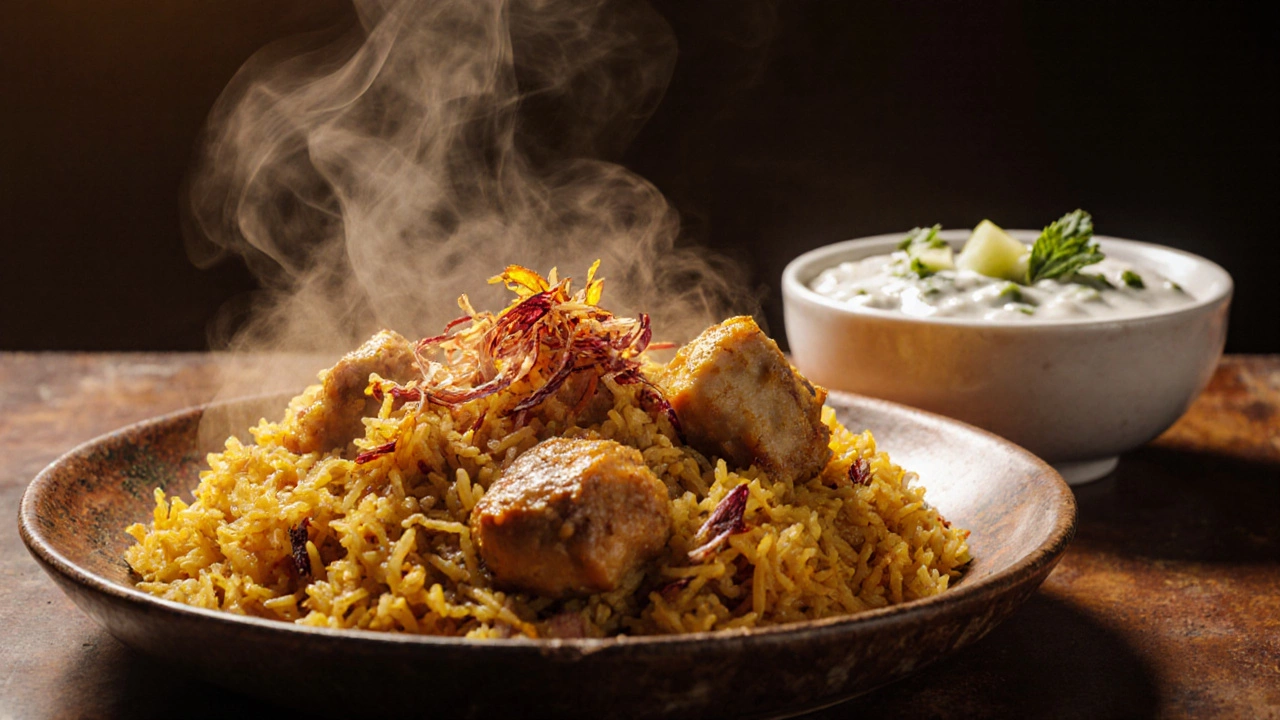
What Is the White Liquid Served With Biryani? Discover the Classic Raita
Discover why the white liquid with biryani is raita, its role, recipes, tips, and how to pair it with different biryanis.
Read More