Red Onion in Indian Cooking: Uses, Substitutes, and Why It Matters
When you think of red onion, a pungent, colorful bulb often used raw or lightly cooked for its sharp bite and vibrant hue. Also known as purple onion, it's a common sight in salads, raitas, and garnishes across India—but not always in the curry pot. Unlike white or yellow onions, red onion doesn’t caramelize well and can turn mushy when cooked too long. That’s why you’ll rarely find it simmering in a slow-cooked curry, but you’ll spot it sliced thin over biryani or chopped into a tangy kachumber salad.
Indian kitchens rely on onions, the foundational base for most curries, dals, and rice dishes for depth and sweetness. But the type matters. Yellow onions are the go-to for frying into golden bases because they break down into rich, sweet paste. Red onions? They’re for texture and contrast. Their color pops in a plate of chaat, their bite cuts through fatty paneer dishes, and their crunch adds freshness to street food like pani puri. But if you’re making a dish that needs slow-cooked onion sweetness—like butter chicken or a rich biryani layer—red onion won’t deliver. It’ll leave a raw, peppery aftertaste instead of melting into the background.
What if you don’t have red onion? Swap it with shallots, small, mild onions with a hint of garlic that work well raw or lightly sautéed. They’re closer in flavor and texture, and you’ll find them in South Indian kitchens for pickles and chutneys. If you’re out of those, try a tiny bit of white onion—just enough to mimic the crunch without overpowering. But don’t skip the garnish. That red ring on your biryani isn’t just decoration. It’s tradition. It’s balance. It’s the difference between a good meal and a memorable one.
You’ll find red onion in the recipes here—not because it’s the star, but because it’s the quiet hero. It’s in the raita that cools your spice, the salad that wakes up your dal, the garnish that turns a simple plate into something special. Some posts will tell you why it’s left out of biryani bases, others will show you how to use it right. You’ll learn what to do when your recipe calls for onion but you only have red ones, and why Jains avoid all onions—including red ones—due to spiritual beliefs about root vegetables. You’ll see how it pairs with yogurt, how it affects digestion, and why some cooks swear by it while others avoid it like a bad spice.
So whether you’re adding it for color, crunch, or contrast—or wondering why your biryani tastes off because you used red onion in the base—this collection has the answers. No fluff. Just real kitchen truth.
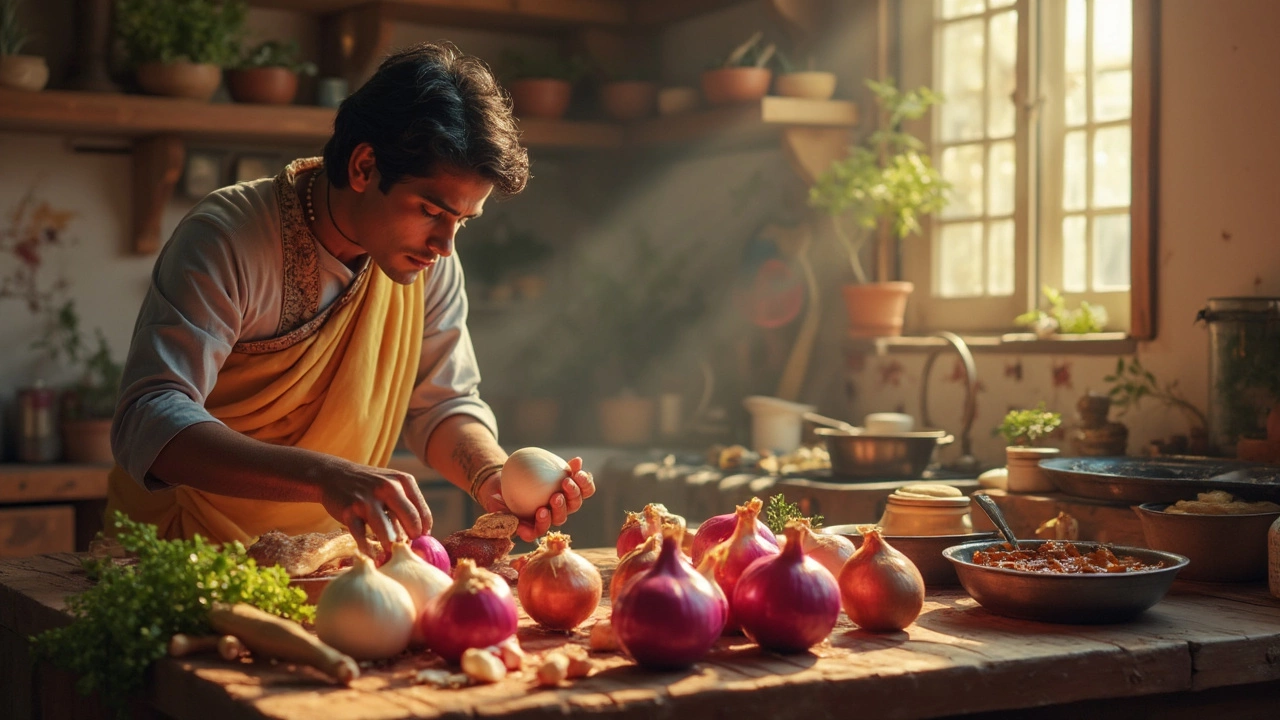
Red or White Onions: Which Is Best for Chicken Curry?
Not sure whether to grab red or white onions for your chicken curry? This article breaks down how each kind affects the taste, color, and texture of your curry. Get tips on how Indian cooks actually use onions in their home kitchens, and learn small tricks that could make your next curry even better. Find out when it’s worth swapping one type for another and which mistakes to avoid if you want the real deal. If you've been curious about the science behind those golden-brown onions, you’re in the right place.
Read More