Ideal Temperature for Indian Cooking: What You Need to Know
When you're making ideal temperature, the precise heat level that ensures food transforms correctly during cooking or fermentation. It's not just about boiling or simmering—it's about timing, texture, and tradition. In Indian kitchens, getting the temperature right isn't optional. It’s what turns soft dough into crispy dosa, milky curds into firm paneer, and bland rice into fragrant biryani.
Take dosa fermentation, the natural process where bacteria turn rice and lentil batter sour and airy. This only works between 28°C and 32°C. Too cold, and your batter stays thick and flat. Too hot, and it turns bitter or smells off. That’s why many households keep batter near the stove or in a warm corner—because science, not guesswork, decides if your dosa will crisp up. The same goes for paneer curdling, the moment milk separates into solid curds and watery whey. You need the milk at a rolling boil—around 90°C—before adding lemon juice or vinegar. Add acid too early, and you get weak curds. Too late, and the milk scalds. The temperature isn’t just a number—it’s the gatekeeper of texture. Even biryani cooking, the slow-steamed layering of rice and meat, relies on low, steady heat during dum cooking. If the pot’s too hot, the bottom burns. Too low, and the spices never bloom. That’s why traditional recipes call for sealed pots and charcoal—because heat control is the secret behind restaurant-style results.
And don’t forget milk-based desserts. Ideal temperature makes or breaks kheer, rabri, or gulab jamun. Heat milk too fast, and it scalds or forms a skin. Cook it too slow, and you wait hours for the right thickness. Most home cooks don’t realize that the magic happens between 70°C and 85°C—just below boiling. That’s when the milk thickens without burning, and sugar dissolves evenly. It’s not magic. It’s physics.
You’ll find posts here that explain why your dosa batter won’t rise, why your paneer crumbles, or why your biryani turns mushy. They all point back to one thing: temperature. Not guesses. Not luck. Just the right heat at the right time. Whether you’re new to Indian cooking or have been stirring pots for years, getting this right changes everything.
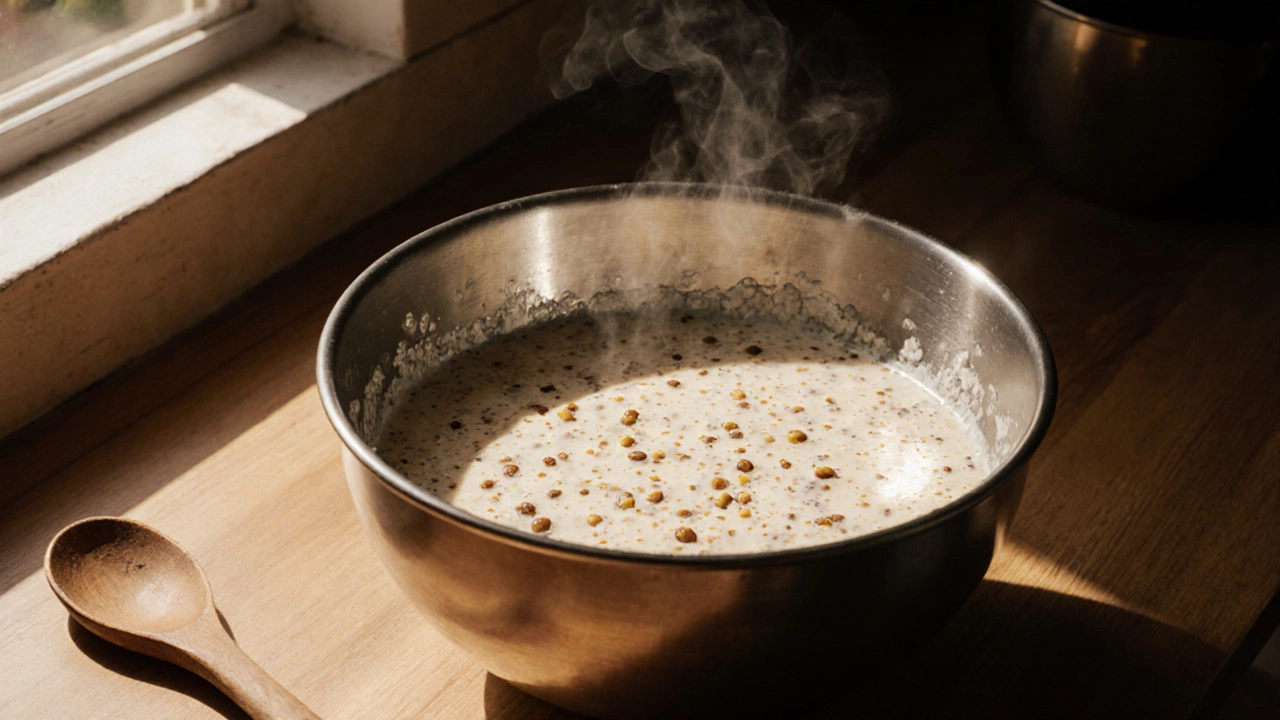
Dosa Batter Fermentation Time: How Many Hours Needed?
Learn the exact fermentation time for dosa batter, how temperature and starter culture affect it, and get tips to achieve perfect dosas every time.
Read More