How Long to Soak, Ferment, or Cook? Time Secrets for Indian Cooking
When it comes to Indian cooking, how long, the duration of soaking, fermenting, or cooking ingredients directly affects texture, flavor, and digestibility. Also known as timing in Indian recipes, getting this right turns an okay dish into a great one. It’s not about following a clock—it’s about understanding what’s happening inside your pot or batter. For example, soaking dal isn’t just a step you check off—it’s when enzymes break down complex sugars, making your lentils easier to digest and tastier. Skip it, and you’ll end up with hard beans and bloating.
Then there’s fermentation, the natural process where bacteria turn sugars into lactic acid, giving dosa and idli batter their tang and fluff. Also known as natural leavening, this isn’t magic—it’s science you can control. Too short? Your dosa won’t crisp. Too long? It turns sour beyond use. Most home cooks don’t realize that temperature and water quality change fermentation time by hours, not days. And when it comes to cooking time, especially for dishes like biryani or paneer. Also known as heat management, it’s not just about boiling longer—it’s about layering, steaming, and resting at the right moments.
Think about paneer. How long you let the milk curdle with lemon juice or vinegar changes whether your paneer is crumbly or firm. Or consider biryani: if you skip the dum cooking step—where the pot is sealed and left to steam—you’re not just missing flavor, you’re missing the whole point. Even something as simple as keeping roti soft for hours depends on how long you let it rest after cooking, and how you wrap it. These aren’t random tips—they’re timed processes baked into generations of Indian kitchens.
You’ll find posts here that answer exactly how long to soak chana dal versus moong dal, why dosa batter needs 8–12 hours and not 2, and whether adding yeast cuts corners or ruins flavor. You’ll learn why some dals are bad to eat at night—not because of myths, but because digestion slows down after sunset. You’ll see how milk quantity affects paneer yield, and why the same biryani recipe can fail if you cook it 10 minutes too long.
This isn’t about memorizing numbers. It’s about understanding the rhythm of Indian cooking. Once you know how long things need to sit, ferment, or simmer, you stop following recipes blindly and start cooking with confidence. The difference between a good meal and a great one? It’s often just a matter of time.
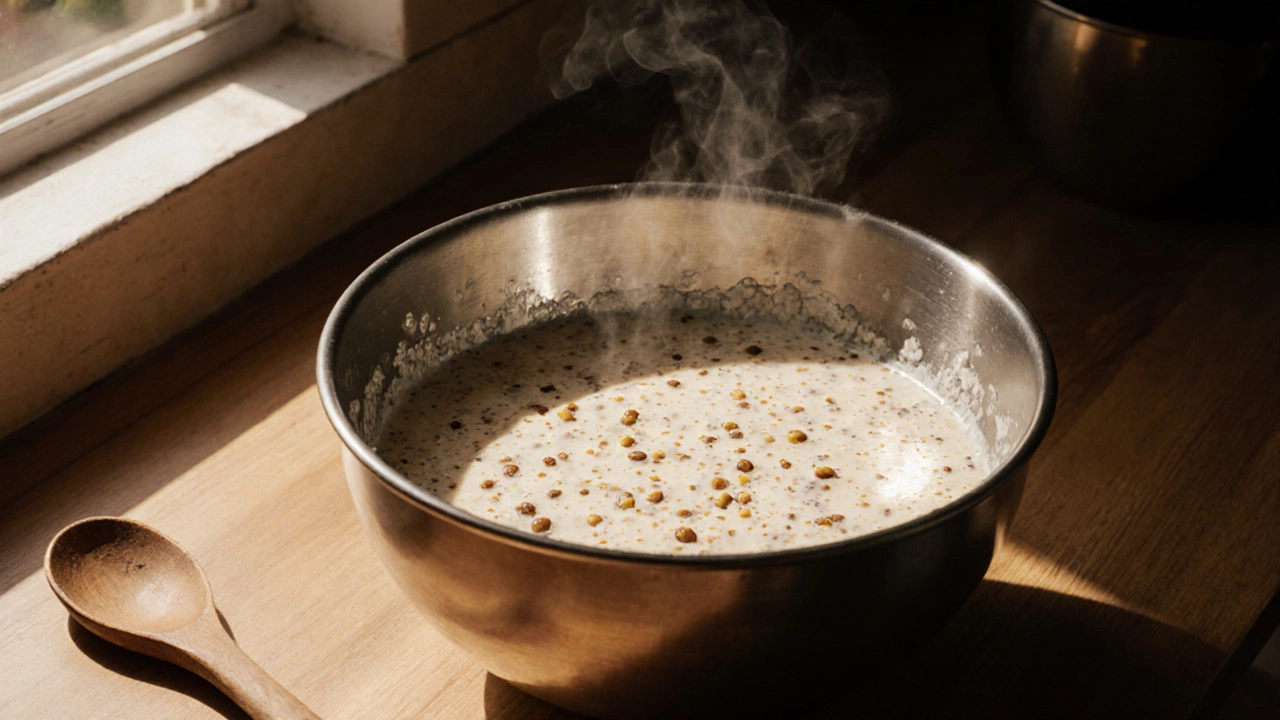
Dosa Batter Fermentation Time: How Many Hours Needed?
Learn the exact fermentation time for dosa batter, how temperature and starter culture affect it, and get tips to achieve perfect dosas every time.
Read More