Hindi okay slang: Common Indian phrases and how they're really used
When someone says Hindi okay slang, a mix of Hindi words and casual English used in everyday Indian speech. Also known as Hinglish, it's not broken language—it's the living, breathing way millions talk at home, on buses, and in kitchens across India. You won't find this in textbooks. You won't hear it in news broadcasts. But you'll hear it every morning when your aunt asks if you "thoda salt daal diya?" or your friend says "yaar, yeh sab thik hai" before diving into a plate of biryani.
This isn't just about mixing languages. It's about rhythm, tone, and context. When you say "chalo, let's go" instead of just "chalo," you're not being lazy—you're matching the pace of modern life. When someone says "itna mat bolo" (don't say so much), they're not being rude—they're signaling you've gone too far. These phrases carry weight. They carry culture. And they show up everywhere in Indian homes—from the way your grandma scolds you for eating too much ghee to how your cousin texts you before a party: "yaar, dress kya pehne?" Hinglish, the blend of Hindi and English used in casual Indian speech isn't new. It's been growing since colonial times, but now it's dominant. You'll see it in ads, on YouTube, even in WhatsApp status updates. It's the language of relatability. When a recipe says "1 cup milk, whisk till frothy" instead of "1 cup doodh, thoda dhakkan tak ghunten"—it's not just convenience. It's identity.
And then there's the slang that doesn't even need Hindi or English to make sense. "Arre yaar"—used to express surprise, frustration, or excitement. "Bas, abhi"—meaning "enough for now." "Thoda sa"—not a little, but just enough. These aren't words you learn. You absorb them. Like the smell of cumin in hot oil. You don't ask where it comes from—you just know it's home.
The posts below don't just talk about food. They talk about how people talk while making it. Why someone says "ye toh perfect hai" after their first dosa. Why a grandmother insists "ye toh sahi hai" even when the batter is too thin. Why "thoda aur" becomes the most repeated phrase in Indian kitchens. This collection is full of real moments—where language, food, and culture meet in the most ordinary, beautiful ways.
What you'll find here aren't grammar lessons. They're snapshots of real life. The kind of phrases you hear when you're standing beside someone as they flip a roti, taste a curry, or argue about whether to add sugar to tea. These aren't translations. They're truths. And they're the reason Indian food doesn't just taste good—it feels like home.
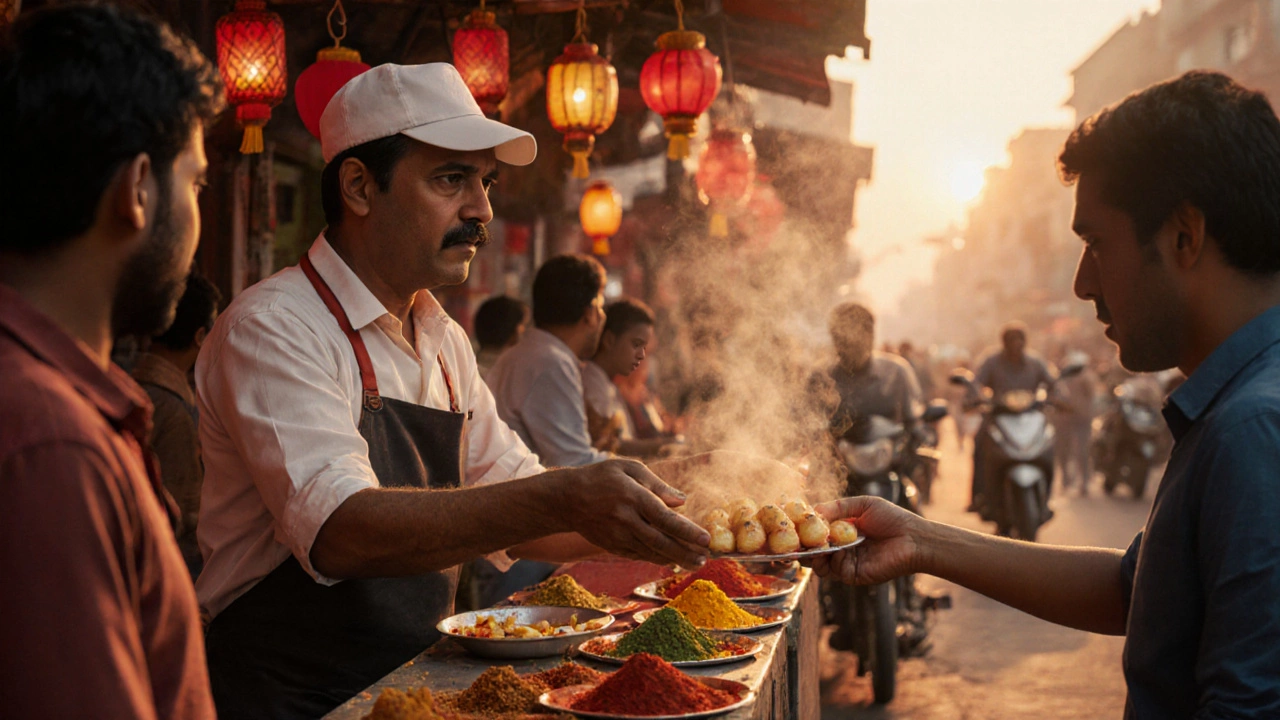
What Is the Indian Slang for Okay? Street Food Lingo You Need to Know
Learn the most common Indian slang for 'okay' used at street food stalls - 'Theekha' - and how to use it to blend in, order faster, and connect with vendors across India.
Read More