Food Vendor Lingo: Understand Indian Street Food Terms and Tricks
When you hear a street vendor shout food vendor lingo, the coded phrases, slang, and shorthand used by Indian street cooks to communicate quickly and efficiently. Also known as bazaar speak, it’s not just noise—it’s a system built over decades to keep orders moving, ingredients fresh, and customers happy. If you’ve ever stood in line at a roadside stall and wondered why they said "double dosa" or "broken milk" and didn’t flinch, you’re not alone. These aren’t mistakes—they’re shorthand. And knowing them helps you order better, eat safer, and even cook smarter at home.
Behind every sizzling tawa and steaming pot is a hidden language. For example, when a vendor says "fermented batter" for dosa, they’re not talking about fancy science—they’re saying the batter sat overnight and turned tangy on its own, the way it should. That’s the difference between a crisp, golden dosa and a soggy mess. Same with paneer, a fresh Indian cheese made by curdling milk with acid like lemon juice or vinegar. Also known as Indian cottage cheese, it’s the star of paneer tikka, palak paneer, and even street snacks like paneer bhurji. Vendors know exactly which acid gives the firmest curd—lemon juice for that clean taste, vinegar for faster results, citric acid for consistency. They don’t say "citric acid" though. They say "white powder" or "commercial curd". Learn the terms, and you learn how to tell good paneer from rubbery junk.
It’s the same with biryani, a layered rice dish cooked with spices, meat, and sometimes yogurt or saffron. Also known as dum biryani, it’s not just rice and meat—it’s technique. Vendors don’t say "dum cooking"; they say "sealed pot" or "slow steam". Skip that step, and you get dry, flavorless rice. That’s why the best biryanis are made in heavy pots with dough-sealed lids. And that white liquid served beside it? That’s raita, a yogurt-based condiment with cucumber, mint, or roasted cumin. Also known as yogurt side dish, it cools the spice and cuts the fat. Vendors know raita isn’t optional—it’s essential. If they don’t offer it, they’re cutting corners.
Street food isn’t just about taste—it’s about trust. Vendors don’t waste time explaining. They use terms like "fresh oil" (not reused), "hot tawa" (not lukewarm), or "no milk powder" (pure paneer). These aren’t marketing buzzwords—they’re survival codes. If you understand them, you skip the bad batches and find the real deals. You’ll know why some dosa batters turn sour naturally, and why adding yeast is a shortcut that ruins flavor. You’ll spot the stall that uses real milk for paneer, not powdered milk and chemicals.
This collection of posts dives into exactly that—the real talk behind the food. From why Jains avoid carrots to how much paneer you get from a gallon of milk, these aren’t theory lessons. They’re street-smart insights pulled from kitchens, markets, and home stoves across India. You’ll learn what to ask for, what to avoid, and why certain phrases mean more than they sound. No fluff. Just the language that keeps Indian street food alive—and how to use it to eat better, anywhere.
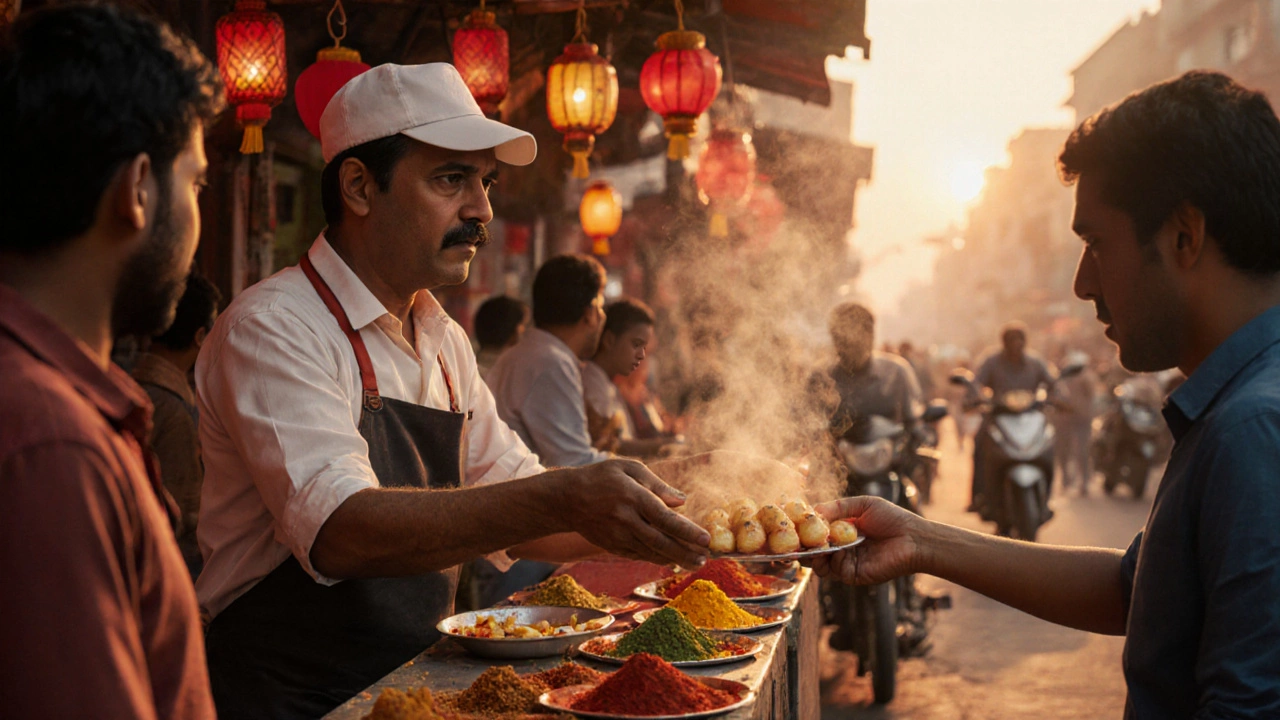
What Is the Indian Slang for Okay? Street Food Lingo You Need to Know
Learn the most common Indian slang for 'okay' used at street food stalls - 'Theekha' - and how to use it to blend in, order faster, and connect with vendors across India.
Read More