Biblical Diet Explorer: Scripture & Plant-Based Living
Explore key Bible verses regarding vegetarianism and meat-eating. Select a topic to see the scripture, its context, and what it implies for your diet.
Have you ever scrolled through social media and seen a post claiming that God originally designed humans to be vegetarians? It’s a popular talking point in modern wellness circles, especially among those looking for spiritual justification for a plant-based lifestyle. If you are trying to reconcile your faith with a vegetarian or vegan diet, you might be hunting for a specific verse that commands you to eat only plants. The short answer is that the Bible does not explicitly command all believers to be vegetarian today. However, it does offer fascinating insights into dietary shifts, stewardship of the earth, and the sanctity of life that many Christians find compelling.
Understanding what the text actually says requires looking at the historical context, the shift from the Garden of Eden to the post-Flood world, and how New Testament teachings reframe our relationship with food. This isn't just about theology; for many Indian households and global communities alike, this question intersects deeply with daily cooking choices, ethical eating, and health goals. Let's break down the key passages so you can make an informed decision that aligns with both your conscience and your kitchen.
The Original Blueprint: Genesis 1:29
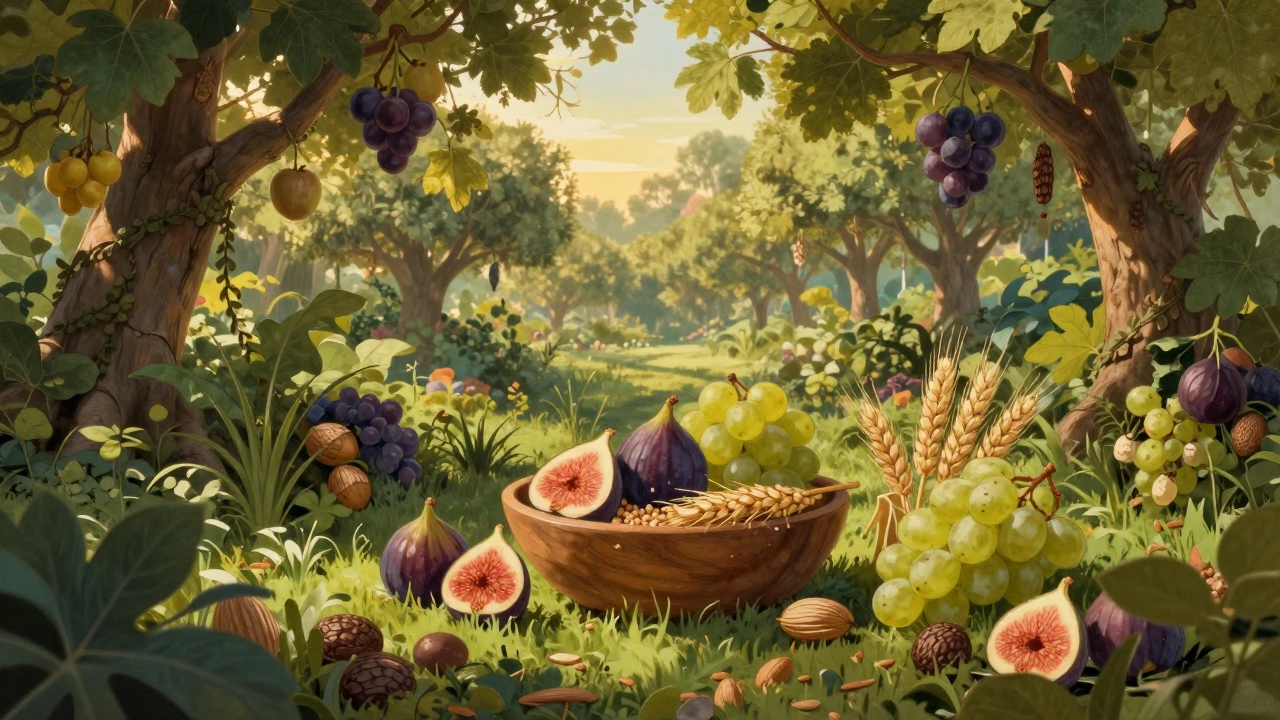
When people argue for a biblical basis for vegetarianism, they almost always start here. In Genesis 1:29, which is a foundational scripture describing God's provision of food in the creation narrative, God gives humanity its first dietary instructions. The verse states: "And God said, 'Behold, I have given you every plant yielding seed that is on the face of all the earth, and every tree with seed in its fruit. You shall have them for food.'"
This passage is often cited as proof that the original design was purely plant-based. In the ideal state of the Garden of Eden, there was no death, no predation, and no violence. Humans ate fruits, seeds, and nuts. For many modern Christians, returning to this "Edenic" diet is seen as a way to restore harmony with creation. It suggests that meat-eating is not part of God's original perfect plan but rather a concession to a fallen world.
However, notice the wording. God says, "You shall have them for food." He does not say, "You shall eat ONLY these." While some interpret this exclusivity strongly, others see it as a description of abundance rather than a restrictive law. Still, the imagery is powerful. It connects eating plants with peace and innocence. If you are looking for a spiritual anchor for your vegetarian journey, Genesis 1:29 provides a beautiful vision of what human sustenance looked like before sin entered the picture.
The Shift After the Flood: Genesis 9:3
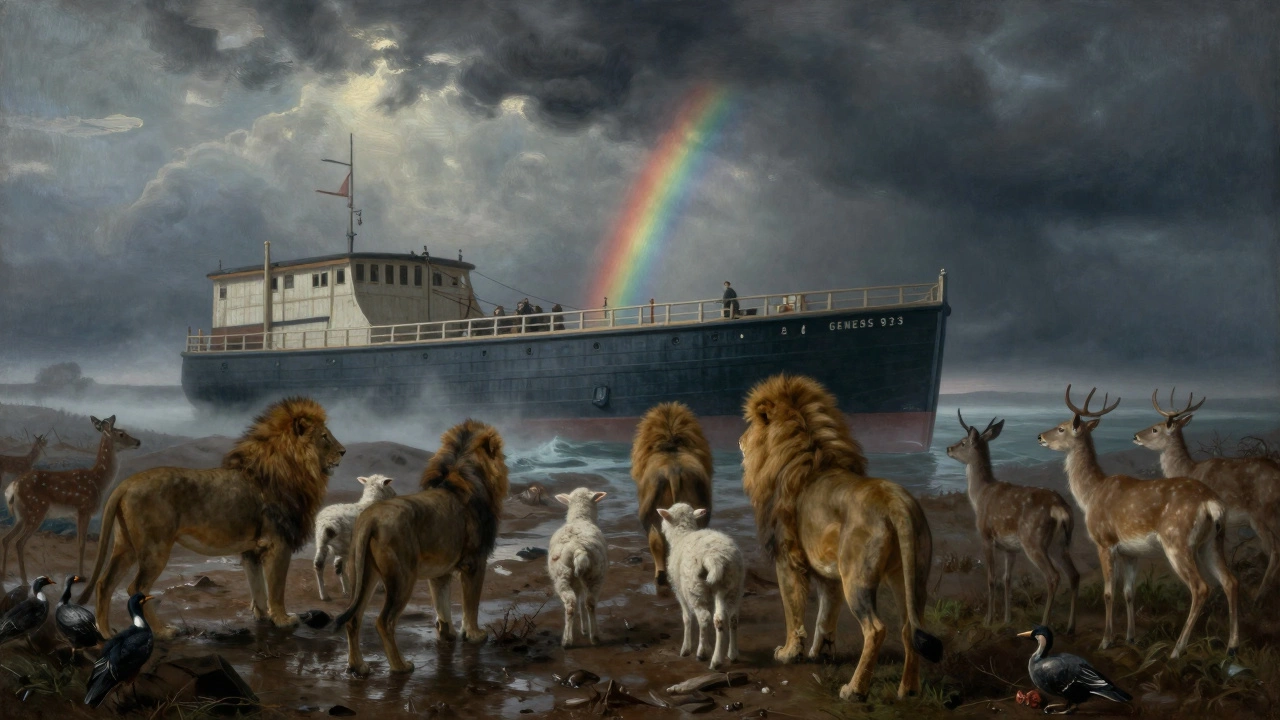
If Genesis 1:29 represents the ideal, Genesis 9:3 is the scripture where God expands the diet to include animals after the Great Flood. After Noah and his family exit the ark, God establishes a new covenant with humanity. The text reads: "Every moving thing that lives shall be food for you. And as I gave you the green plants, I give you everything."
This is a pivotal moment in biblical history. The introduction of meat into the human diet is linked directly to the consequences of the Fall and the judgment of the Flood. Some theologians argue that meat-eating was permitted out of necessity in a harsher, post-diluvian world where growing crops might have been more difficult. Others view it as a sign of God's grace-providing for His people even when the perfect order was broken.
For the vegetarian reader, this verse can feel like a setback. It seems to legitimize killing animals for food. But look closer at the context. God places boundaries around this permission. In Genesis 9:4, He prohibits eating blood, recognizing the sanctity of life. This shows that even when meat is allowed, it is not without moral weight. The shift from Genesis 1 to Genesis 9 highlights a movement from perfection to provision, suggesting that while meat is permissible, it may not be the highest ideal.
Old Testament Laws: Clean vs. Unclean
Moving forward to the Law of Moses, we encounter detailed dietary regulations in Leviticus 11 and Deuteronomy 14. These chapters categorize animals as "clean" (permissible to eat) and "unclean" (forbidden). Animals that chew the cud and have split hooves, like cows and sheep, were acceptable. Pigs, shellfish, and birds of prey were not.
Interestingly, the Old Testament never commands Israelites to eat meat. In fact, the default diet in ancient Israel was largely grain-based, supplemented by vegetables, legumes, and occasional dairy. Meat was typically reserved for special occasions, festivals, or sacrifices. Most ordinary people ate very little meat due to economic constraints. So, historically, the average biblical Jew lived on a diet that was predominantly plant-based.
Furthermore, the concept of Sabbath rest extended to animals. Exodus 23:12 commands that oxen and donkeys must rest on the seventh day. This reflects a deep respect for animal welfare woven into the fabric of Jewish law. While this doesn't mandate vegetarianism, it establishes a principle of compassion and stewardship that resonates with modern ethical vegans.
New Testament Freedom and Conscience
In the New Testament, the focus shifts from dietary laws to matters of conscience and love. Romans 14 is a critical chapter addressing disputes between believers over food choices. Paul writes about those who "eat everything" and those who "eat only vegetables." He emphasizes that neither group should judge the other. "One person believes he may eat anything, while the weak person eats only vegetables," he notes.
Paul’s instruction is clear: Do not let your food cause another believer to stumble. If eating meat offends someone else's conscience, abstain out of love. This passage elevates the issue from mere nutrition to community harmony. It validates the choice to be vegetarian as a legitimate expression of faith, provided it is done in sincerity and not to boast superiority.
Similarly, in 1 Corinthians 8, Paul addresses food sacrificed to idols. The core principle remains: Knowledge puffs up, but love builds up. If your freedom to eat meat harms another person's spiritual well-being, choose love over liberty. For many Christians today, this means choosing vegetarianism not because it is commanded, but because it reflects a heart of compassion and consideration for others, including the vulnerable creatures we share the earth with.
Jesus and the Prophetic Vision of Peace
While Jesus never explicitly issued a dietary command, His teachings and the prophetic visions surrounding Him point toward a future restoration of peace. Isaiah 11:6-9 describes a messianic age where predators and prey live together in harmony: "The wolf shall dwell with the lamb... They shall not hurt or destroy in all my holy mountain." This eschatological vision implies a world without violence, including the violence of slaughter.
Jesus Himself performed miracles involving food, such as feeding the 5,000 with fish and loaves. Yet, He also associated with tax collectors and sinners, showing that inclusion and mercy outweigh ritual purity. When Peter had a vision in Acts 10 of unclean animals being lowered from heaven, God told him, "What God has cleansed, you must not call common." This was primarily about accepting Gentiles into the church, but it also signaled the end of strict Old Testament dietary restrictions.
Does this mean Christians should eat anything? Technically, yes. But does it mean we *should*? Many argue that following Jesus' example of self-sacrifice and care for the marginalized extends to how we treat animals. If we are called to be salt and light, perhaps our diets can reflect that commitment to non-violence and healing.

Practical Application: Bridging Faith and Food
So, where does this leave you standing in your kitchen? The Bible does not give a single, binding command for all Christians to be vegetarian. Instead, it offers a spectrum of principles:
- Stewardship: Care for God's creation, including animals and the environment.
- Compassion: Show mercy and avoid causing harm where possible.
- Conscience: Eat according to your own convictions, without judging others.
- Health: Honor your body as a temple of the Holy Spirit (1 Corinthians 6:19).
For many, adopting a vegetarian diet is a practical way to live out these values. It reduces environmental impact, promotes personal health, and aligns with the peaceful vision of Isaiah. Whether you choose to follow the Genesis 1 model strictly or simply reduce meat consumption out of ethical concern, the goal is to honor God through your choices.
| Perspective | Key Verse | Implication for Diet |
|---|---|---|
| Creation Ideal | Genesis 1:29 | Plant-based diet as the original, peaceful design. |
| Post-Flood Provision | Genesis 9:3 | Meat permitted but regulated (no blood). |
| Mosaic Law | Leviticus 11 | Clean vs. unclean animals; meat rare for most. |
| New Testament Freedom | Romans 14 | Dietary choices matter to conscience, not salvation. |
Frequently Asked Questions
Does the Bible explicitly forbid eating meat?
No, the Bible does not explicitly forbid eating meat for all believers. In Genesis 9:3, God permits Noah and his descendants to eat meat. In the New Testament, Jesus and the apostles ate fish and other meats. However, the Bible encourages moderation, gratitude, and consideration for others' consciences regarding food choices.
Why do some Christians believe they should be vegetarian?
Many Christians choose vegetarianism based on Genesis 1:29, which describes a plant-based diet in the Garden of Eden. They also cite concerns about animal welfare, environmental stewardship, and health. Additionally, Romans 14 allows for personal conviction in dietary matters, enabling believers to choose plant-based diets as an act of faith or conscience.
What does Romans 14 say about vegetarianism?
Romans 14 addresses disagreements among believers over food. Paul acknowledges that some eat only vegetables while others eat everything. He instructs readers not to judge each other but to act in faith and love. The key takeaway is that dietary choices are matters of personal conscience and should not cause division within the church.
Is vegetarianism considered a sin in Christianity?
No, vegetarianism is not considered a sin. The New Testament teaches that all foods are clean (Mark 7:19) and that believers are free in Christ. Choosing not to eat meat is a personal decision that can be motivated by health, ethics, or spiritual reasons, none of which are sinful if done with a clear conscience.
How can I explain my vegetarian choice to non-vegetarian Christian friends?
Approach the conversation with humility and love, referencing Romans 14. Explain that your choice is based on personal conviction, health, or compassion, and that you do not judge their different choices. Emphasize that unity in Christ is more important than dietary uniformity, and invite them to share meals where everyone feels comfortable.